Desdemona Despair

Blogging the End of the World™

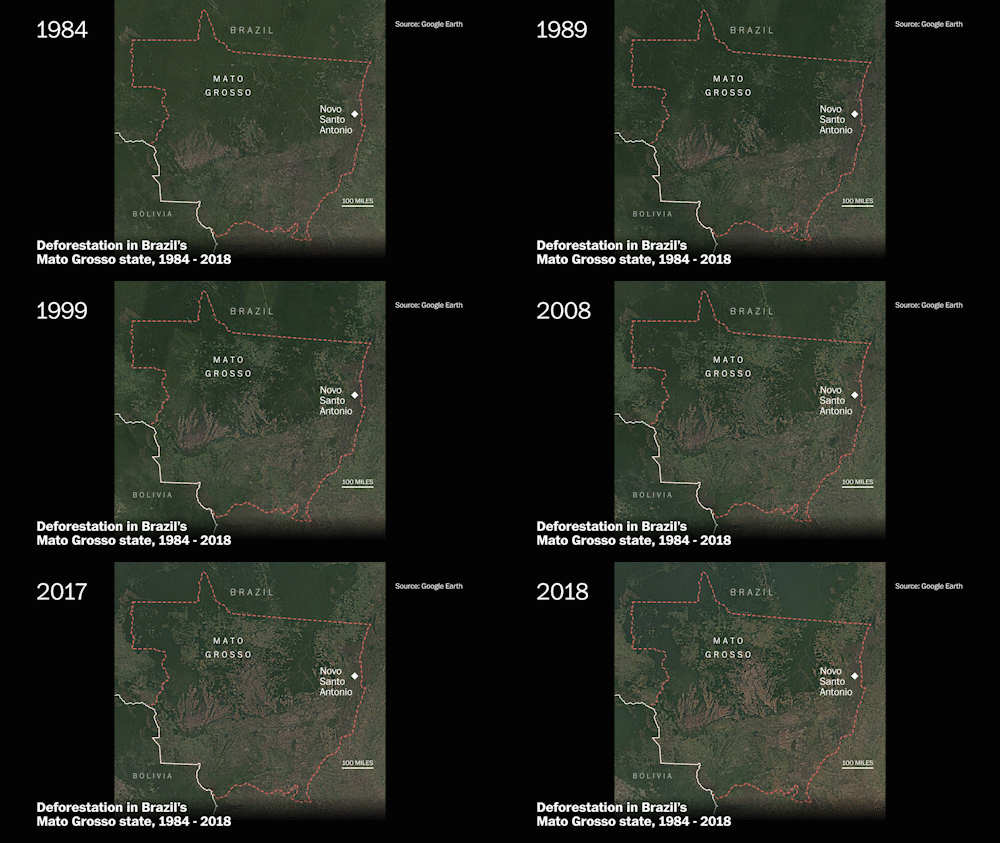
Animation showing deforestation in Brazil’s Mato Grasso state, 1984-2018. Graphic: William Neff / The Washington Post

Brazil’s Bolsonaro calls Amazon deforestation “cultural”, says it “will never end”

By Marina Lopes 20 November 2019 SAO PAULO, Brazil (The Washington Post) – Brazilian President Jair Bolsonaro shrugged off a government report that deforestation in the Amazon reached an 11-year high on his watch, saying Wednesday he expects the destruction of the world’s largest tropical rainforest to continue. “Deforestation and fires will never end,” the […]

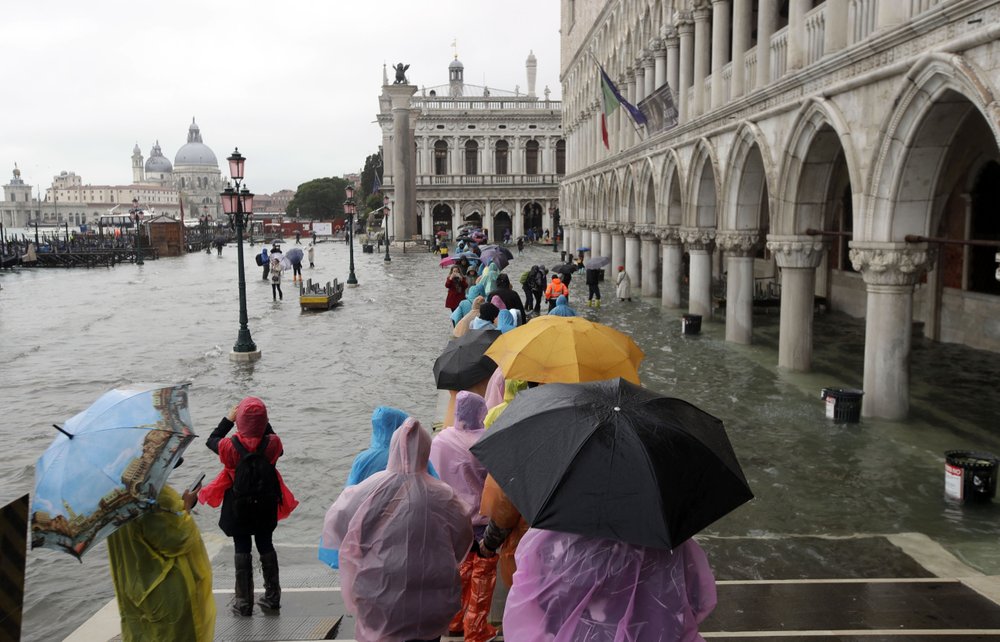
People walk on catwalk set up on the occasion of a high tide, in a flooded Venice, Italy, 12 November 2019. Photo: Luca Bruno / AP Photo

Venice is drowning. It’s a warning of what’s to come.

By Editorial Board 15 November 2019 (The Washington Post) – Venice has always been linked closely with the water that surrounds it. The city is thought to have been founded by refugees seeking protection from Germanic invaders by sheltering in the northwestern Adriatic Sea’s islands and marshes. By the 12th century, the doge would annually […]

Radar plots of urban types based on identified factors. For each city we collect information on 64 urban indicators, from which we identify nine dominant factors: metro, bus rapid transit (BRT), bikeshare, development, population, sustainability, congestion, sprawl, and network density (Oke, et al. 2018). We then cluster the 331 cities on these nine factors, producing 12 unique city types Radar plots indicate normalized factor scores (from 0 to 1) averaged for all cities in each type; adapted from Oke, et al. (2018). The “Congested Boomer” type represents rapidly growing megacities with severe congestion problems and low metro availability, particularly in India; notable members are Bangalore, Mumbai, and Delhi. Graphic: MIT

Why the electric-car revolution may take a lot longer than expected – MIT analysis finds steady declines in battery costs will stall soon

By James Temple 19 November 2019 (Technology Review) – A new report from the MIT Energy Initiative warns that EVs may never reach the same sticker price so long as they rely on lithium-ion batteries, the energy storage technology that powers most of today’s consumer electronics. In fact, it’s likely to take another decade just to eliminate […]

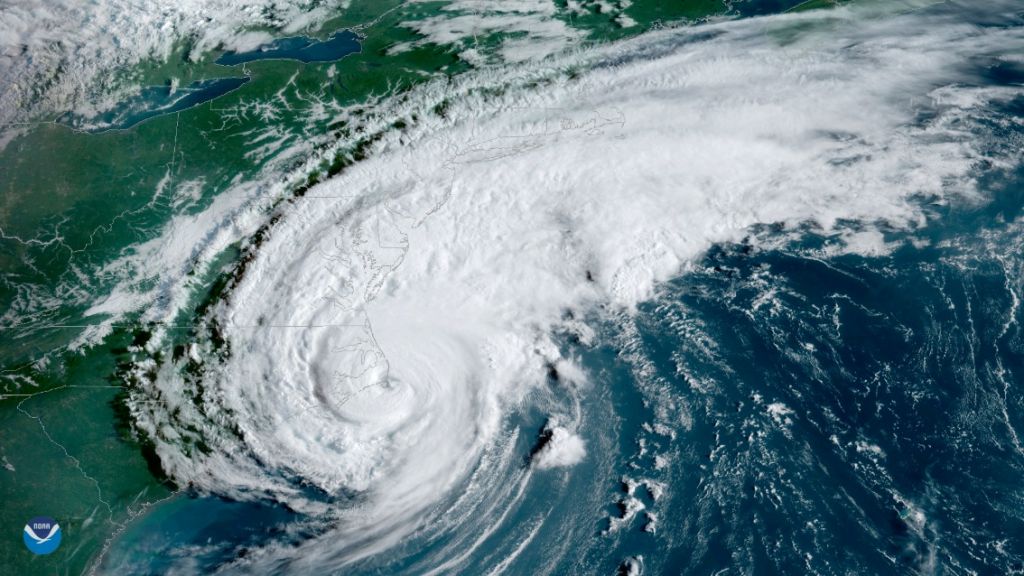
NOAA’s GOES East satellite captured this view of the strong Category 1 storm at 8:20 a.m. EDT, just 15 minutes before the center of Hurricane Dorian moved across the barrier islands of Cape Hatteras. Photo: NOAA

Rising sea levels are swallowing North Carolina’s Outer Banks beaches, new report says

By Hayley Fowler 20 November 2019 CHARLOTTE, North Carolina (The Charlotte Observer) – Hurricanes aren’t the only hazard lapping at the shores of the Outer Banks, according to a report examining the threat of climate change on some of the country’s most beloved natural landscapes. Thanks to creeping sea levels and erosion rates, Cape Hatteras […]

An aerial view of the Cachimbo Biological Reserve in Altamira, Brazil, reveals the scale of the burned land in the Amazon basin, in August 2019. Critics of Brazilian President Jair Bolsonaro trace the recent spike in fires to his administration’s anti-environmental policies. Photo: João Laet / AFP / Getty Images

Amazon rainforest sees biggest spike in deforestation in more than a decade – “Forests fall, indigenous leaders are killed, and environmental laws are shattered”

By Colin Dwyer 18 November 2019 (NPR) – Picture, for a second, just how vast New York City is. All told, including Staten Island, the Bronx and every block in between, the massive metropolis takes up more than 300 square miles. Now, try to picture a hunk of land more than 12 times that size. That’s […]

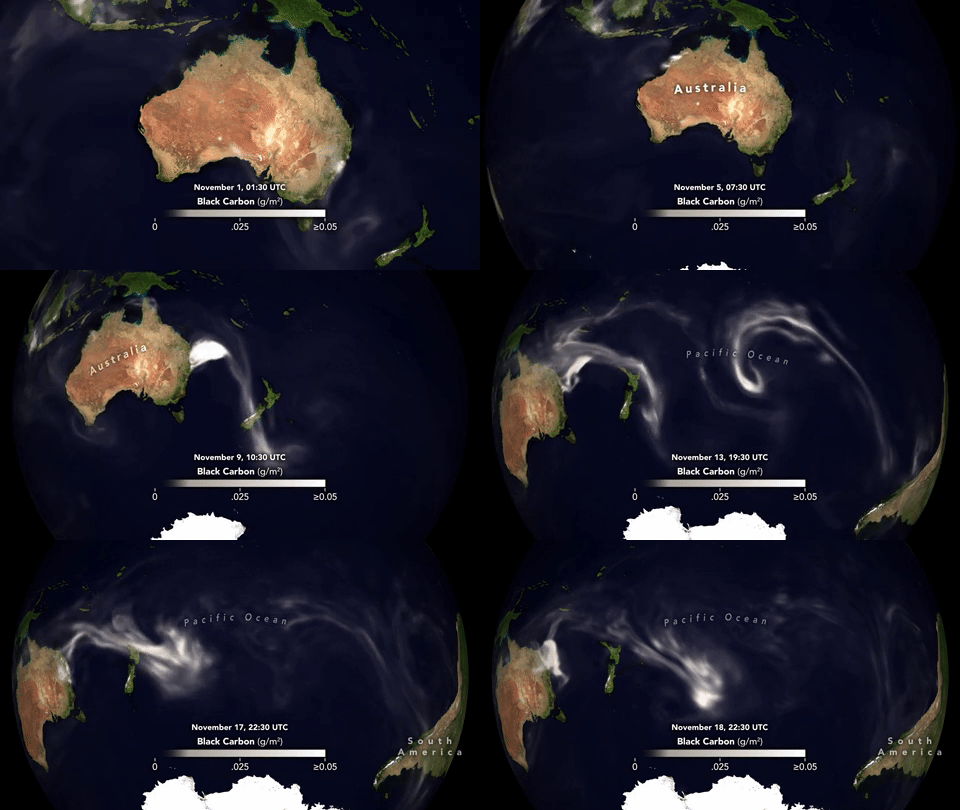
This animation depicts the abundance and direction of black carbon blowing through the atmosphere from 1 November 2019 to 18 November 2019. The data for the animation come from the GEOS forward processing (GEOS-FP) model, which assimilates information from satellite, aircraft, and ground-based observing systems. Video: Joshua Stevens / NASA Earth Observatory

Smoke plumes from Australia bushfires crossing oceans

By Michael Carlowicz and Adam Voiland 21 November 2019 (NASA) – Three weeks into November 2019, springtime bush fires continued to blaze across southern and eastern Australian states. As of November 20, government agencies counted 45 fires in South Australia and 49 in New South Wales, and dangerously dry and windy weather was fanning flames […]

Cover of the album, “From the Mourning of the World”, produced by Marmaduke Dando and released by the Dark Mountain Project. Graphic: Rima Staines

Eco anxiety and grief: It’s real, and there are ways to cope

By Neo Chai Chin 20 November 2019 (Eco-Business) – When about 50 tertiary students and members of the public gathered last month for a workshop in Singapore on next month’s United Nations climate change conference, they talked first about expectations and the ground to be covered at the conference. Then, they discussed feelings of anxiety and fear […]

Likelihood of observing various butterfly species in California, 1980-2015. Graphic: Shaffer Grubb / Los Angeles Times

Scientist has been counting California butterflies for 47 years and now sees them disappearing

By Deborah Netburn 12 November 2019 DONNER PASS, California (Los Angeles Times) – Art Shapiro stands on the edge of a Chevron gas station in the north-central Sierra, sipping a large Pepsi and scanning the landscape for butterflies. So far he’s spotted six species — a loping Western tiger swallowtail, two fluttering California tortoiseshells, a […]

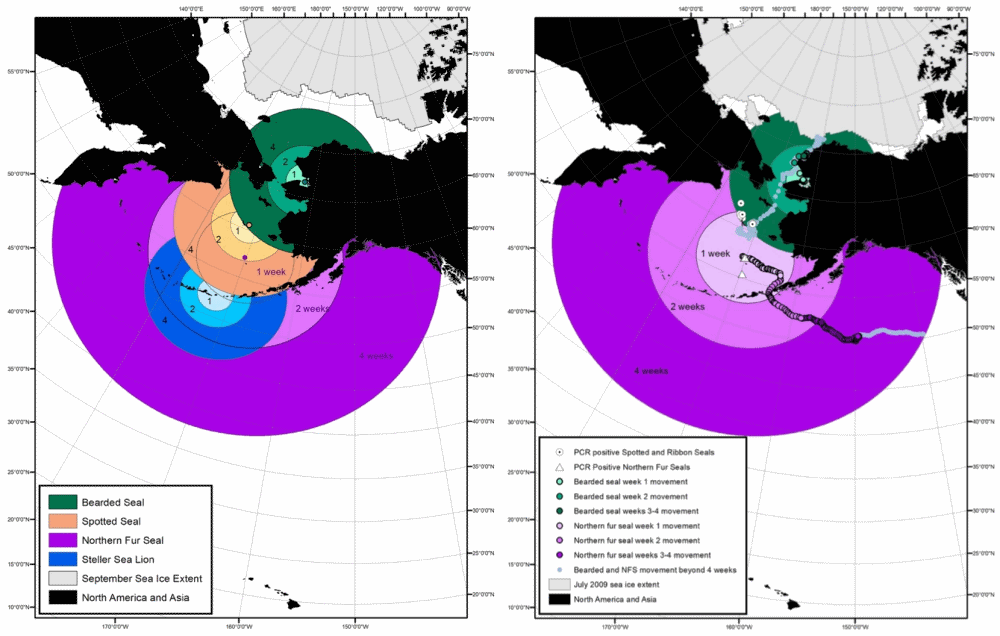
(a) Estimated distances animals can travel during the Phocine distemper virus (PDV) latent and infectious period (1 week, 2 weeks, and 4 weeks) illustrating the areas where viral transmission could occur, based on median travel speeds calculated for satellite-tagged bearded seals (green circles), spotted seals (orange), Steller sea lions (blue), and northern fur seals (purple). (b) Recorded tracks of a PDV seropositive bearded seal followed in July 2009 and a seropositive northern fur seal followed in November 2010 shown with sympatric PCR positive spotted seals, ribbon seals, and northern fur seals sampled 2009–2010. Sea ice is shown at its minimum extent in September (panel a) and retreating the following July after reaching a maximum winter extent (panel b). Graphic: VanWormer, et al., 2019 / Scientific Reports

Deadly virus spreads among marine mammals as Arctic sea ice melts – Scientists fear the virus, once found only in European waters, could spread to the U.S. West Coast

By Sarah Gibbens 7 November 2019 (National Geographic) – When sea otters in Alaska were diagnosed with phocine distemper virus (PDV) in 2004, scientists were confused. The pathogen in the Morbillivirus genus that contains viruses like measles had then only been found in Europe and on the eastern coast of North America. “We didn’t understand how a […]

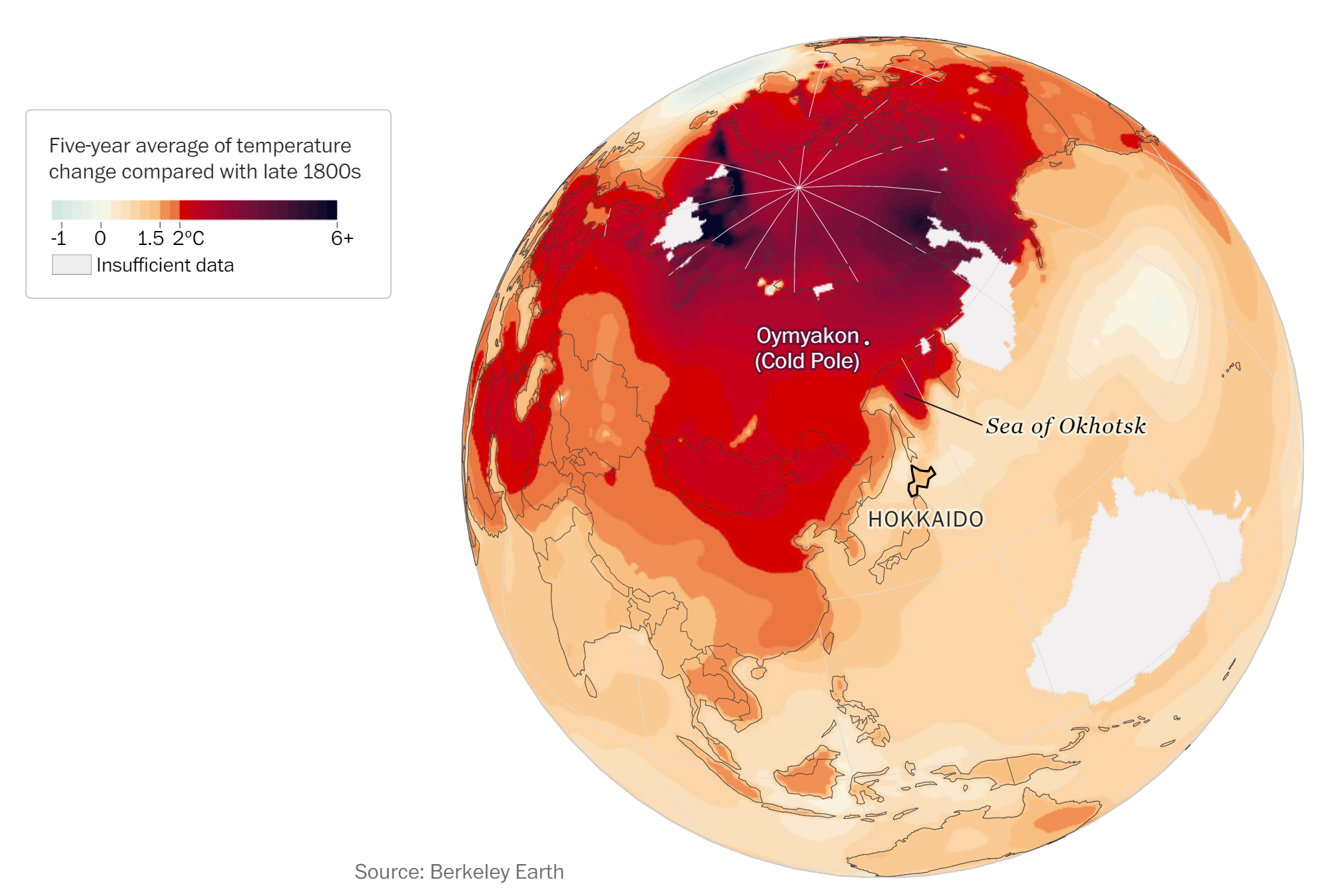
Map showing average surface sea temperature in the Sea of Okhotsk, compared with the late 1800s. Data: Berkeley Earth. Graphic: John Muyskens / The Washington Post

The climate chain reaction that threatens the heart of the Pacific – “When are the fish coming?”

By Simon Denyer and Chris Mooney 12 November 2019 SHIRETOKO PENINSULA, Japan (The Washington Post) – Lined up along the side of their boat, the fishermen hauled a huge, heavy net up from swelling waves. At first, a few small jellyfish emerged, then a piece of plastic. Then net, and more net. Finally, all the […]
Social media & sharing icons powered by UltimatelySocial