Senior ExxonMobil lobbyist on Capitol Hill Keith McCoy describes how ExxonMobil bribes U.S. Senators to kill climate policies in the U.S. During a secretly recorded interview 7 May 2021, McCoy names eleven U.S. senators who he says are “crucial” to ExxonMobil for sabotaging government action to save the planet: Senator Shelley Moore Capito, Senator Joe Manchin, Senator Kyrsten Sinema, Senator Jon Tester, Senator Maggie Hassan, Senator John Barrasso, Senator John Cornyn, Senator Steve Daines, Senator Chris Coons, Senator Mark Kelly, and Senator Marco Rubio. Photo: Greenpeace / Channel 4 News

Revealed: ExxonMobil’s lobbying war on climate legislation – Senior lobbyist caught on camera, names 11 U.S. senators who are “crucial” to ExxonMobil attacks on climate policy

By Alex Thomson 30 June 2021 (Channel 4 News) – The explosive footage was obtained by Unearthed, Greenpeace UK’s investigative platform, who posed as head-hunters to obtain the information from one of ExxonMobil’s most senior Washington lobbyists. The recordings appear to reveal the secretive behind-the-scenes activities of a lobbyist for a company that claims in […]

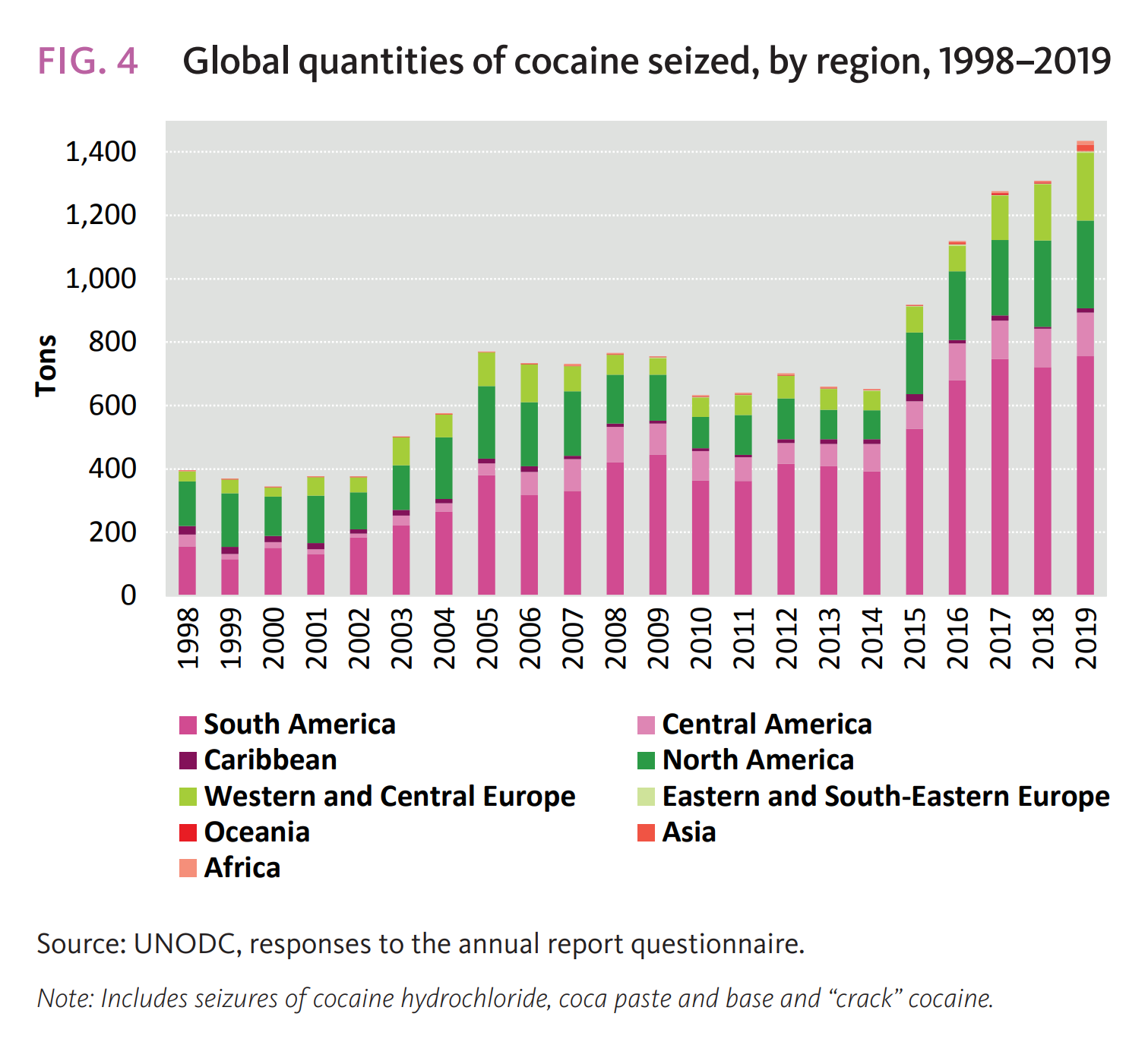
Global quantities of cocaine seized, by region, 1998–2019. Quantities of cocaine seized reached record levels in 2019. In 2019, the global quantity of cocaine seized increased by 9.6 percent compared with the preceding year to reach 1,436 tons (of varying purities), a record high. The 90 percent increase in the quantities of cocaine seized between 2009 and 2019 is likely a reflection of a combination of factors, including an increase in cocaine manufacture (50 per cent between 2009 and 2019) and a subsequent increase in cocaine trafficking, as well as an increase in the efficiency of law enforcement, which may have contributed to an increase in the overall interception rate. Graphic: UNODC

Illegal drug trade back to business as usual in 2020 and 2021 – Cocaine production hits record high – Number of people using illegal drugs increased by 22 percent in 2010-2019 decade

By Pia Lee-Brago 28 June 2021 (The Philippine Star) – Around 275 million people used illegal drugs worldwide in the last year of unprecedented upheaval caused by the COVID-19 pandemic, up by 22 percent from 2010, and it is “business as usual” again for drug traffickers, according to the latest annual world drug report by […]

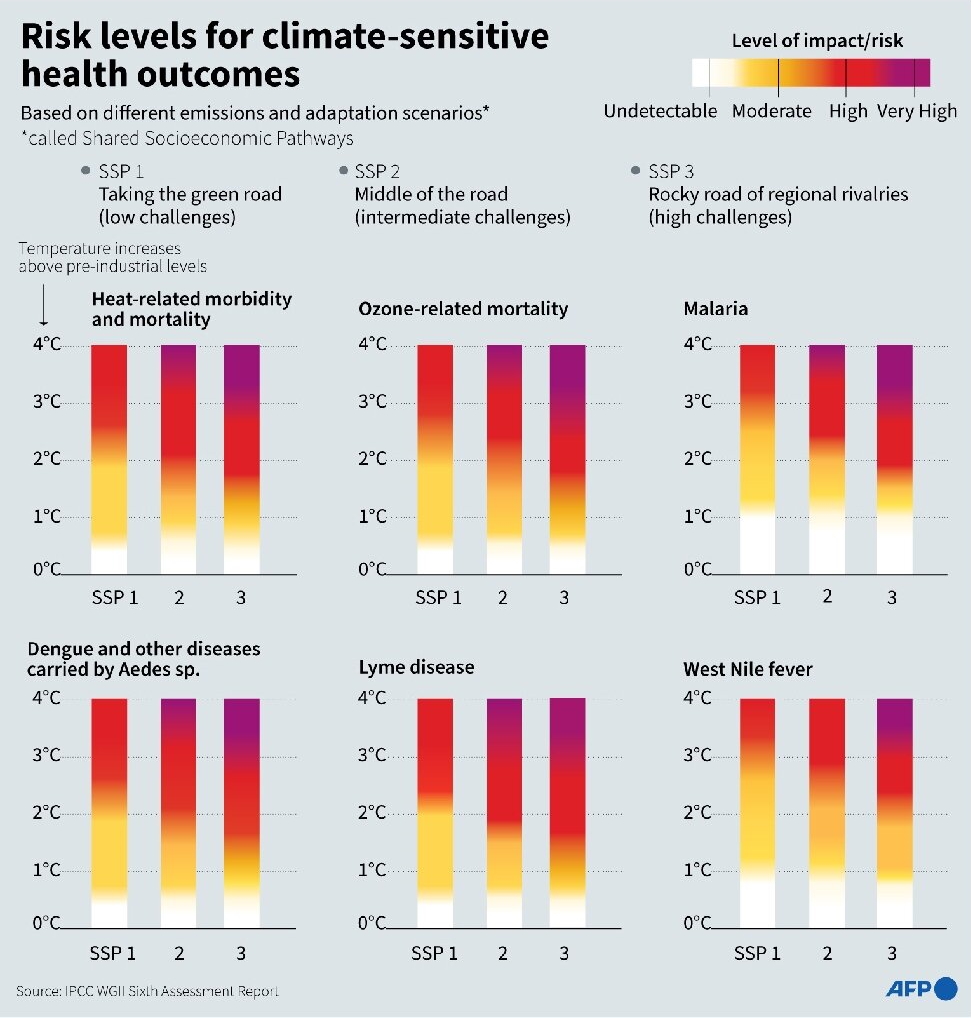
Risk levels for climate-sensitive health outcomes based on different greenhouse gas emissions and adaptation scenarios. Graphic: IPCC WG 2 Sixth Assessment Report / AFP

Hunger, drought, disease: UN climate report reveals dire health threats – “The basis for our health is sustained by three pillars: the food we eat, access to water, and shelter. These pillars are totally vulnerable and about to collapse.”

By Patrick Galey 23 June 2021 (AFP) – Hunger, drought and disease will afflict tens of millions more people within decades, according to a draft UN assessment that lays bare the dire human health consequences of a warming planet. After a pandemic year that saw the world turned on its head, a forthcoming report by […]

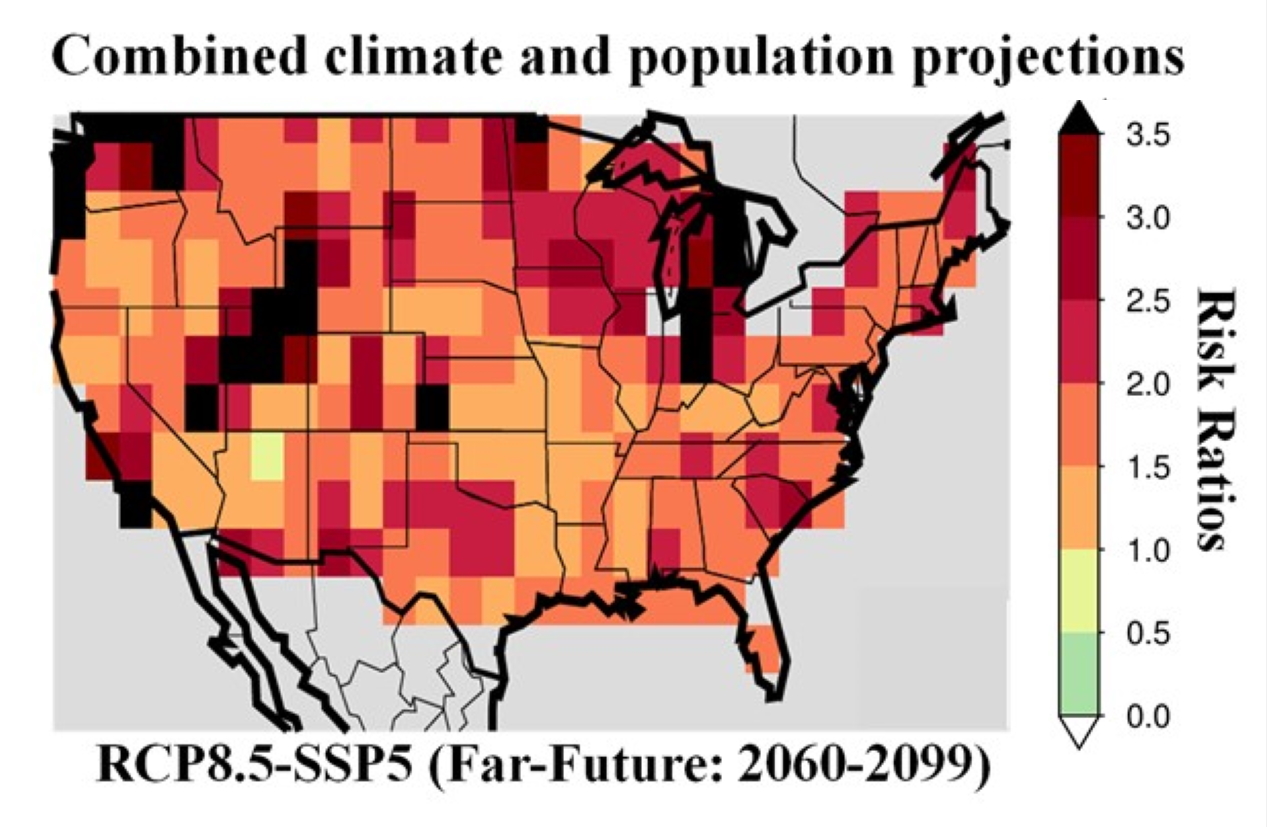
Potential heat stress risk in 2060-2099 due to combined climate and population projections. Periods of extremely high heat are projected to double across the lower 48 states by 2100 if the world continues to emit high levels of greenhouse gases. The heat stress will be felt most strongly in areas with growing populations. The Pacific Northwest, central California, and the Great Lakes region could experience as much as a threefold increase compared to the past 40 years. Graphic: Mukherjee, et al., 2021 / Earth’s Future

Heat stress in U.S. may double by century’s end

7 June 2021 (NSF) – Periods of extremely high heat are projected to double across the lower 48 states by 2100 if the world continues to emit high levels of greenhouse gases, according to a new study in Earth’s Future, an American Geophysical Union journal. The heat stress will be felt most strongly in areas with growing populations. […]

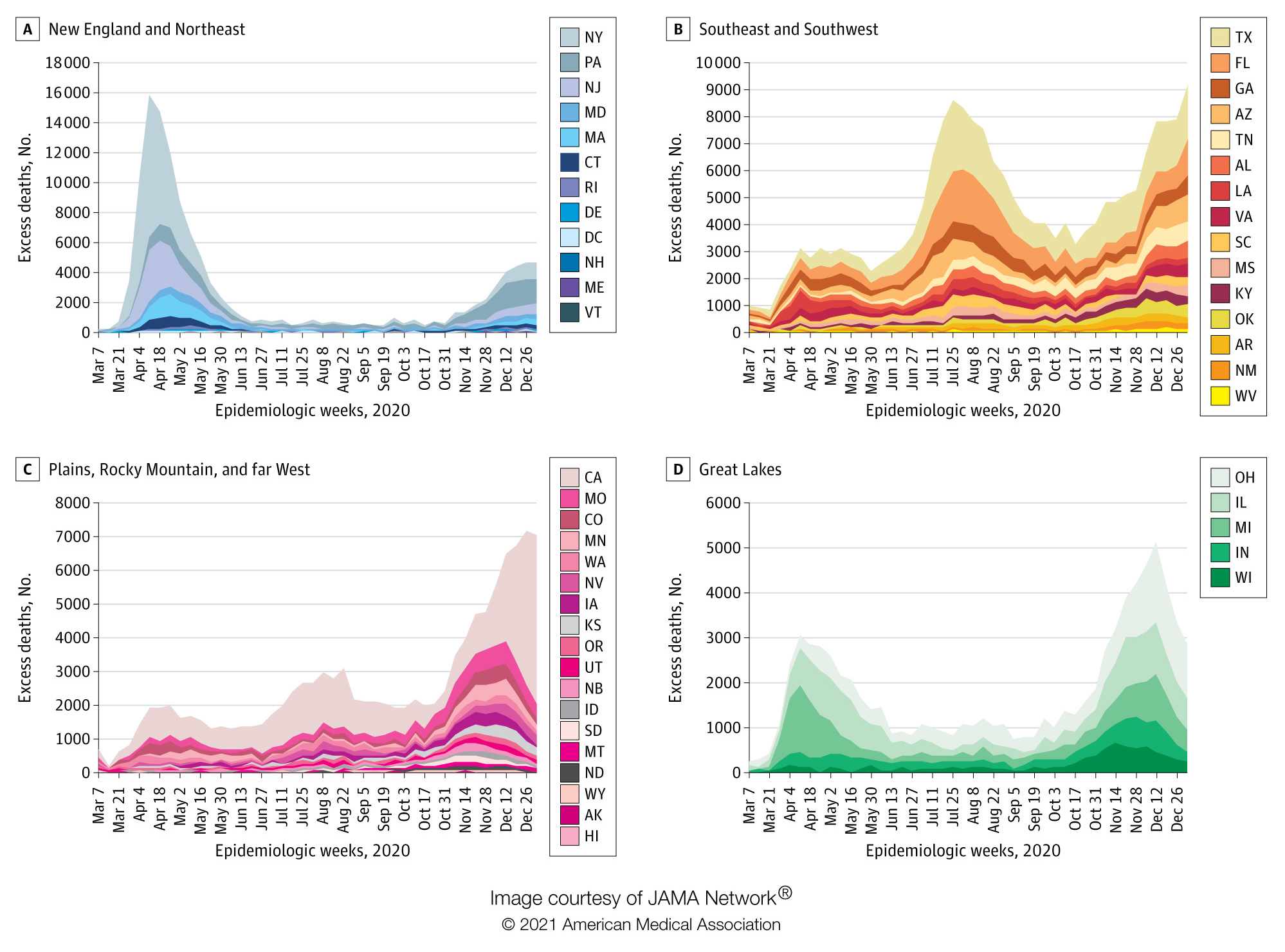
Covid data from U.S. states plotted from 8 regions, as defined by the US Bureau of Economic Analysis. Surge patterns were independently examined for each of the 8 regions; epidemic patterns were similar and could be merged as shown, except a bimodal pattern in the Great Lakes region was distinctive and plotted separately. Negative excess deaths were plotted as zero. Between 1 March 2020, and 2 January 2021, the US experienced 2,801,439 deaths, 22.9% more than expected, representing 522,368 excess deaths. The excess death rate was higher among non-Hispanic Black (208.4 deaths per 100 000) than non-Hispanic White or Hispanic populations (157.0 and 139.8 deaths per 100 000, respectively); these groups accounted for 16.9%, 61.1%, and 16.7% of excess deaths, respectively. The US experienced 4 surge patterns: in New England and the Northeast, excess deaths surged in the spring; in the Southeast and Southwest, in the summer and early winter; in the Plains, Rocky Mountains, and far West, primarily in early winter; and in the Great Lakes, bimodally, in the spring and early winter. Graphic: Woolf, et al., 2021 / JAMA

U.S. excess deaths rose a staggering 23 percent in 2020 – “They said they were opening early to rescue the economy. The tragedy is that not only cost more lives but actually hurt their economy by extending the length of the pandemic.”

By Mary Kate Brogan 2 April 2021 (VCU News) – Extended surges in the South and West in the summer and early winter of 2020 resulted in regional increases in excess death rates, both from COVID-19 and from other causes, a 50-state analysis of excess death trends has found. Virginia Commonwealth University researchers’ latest study […]

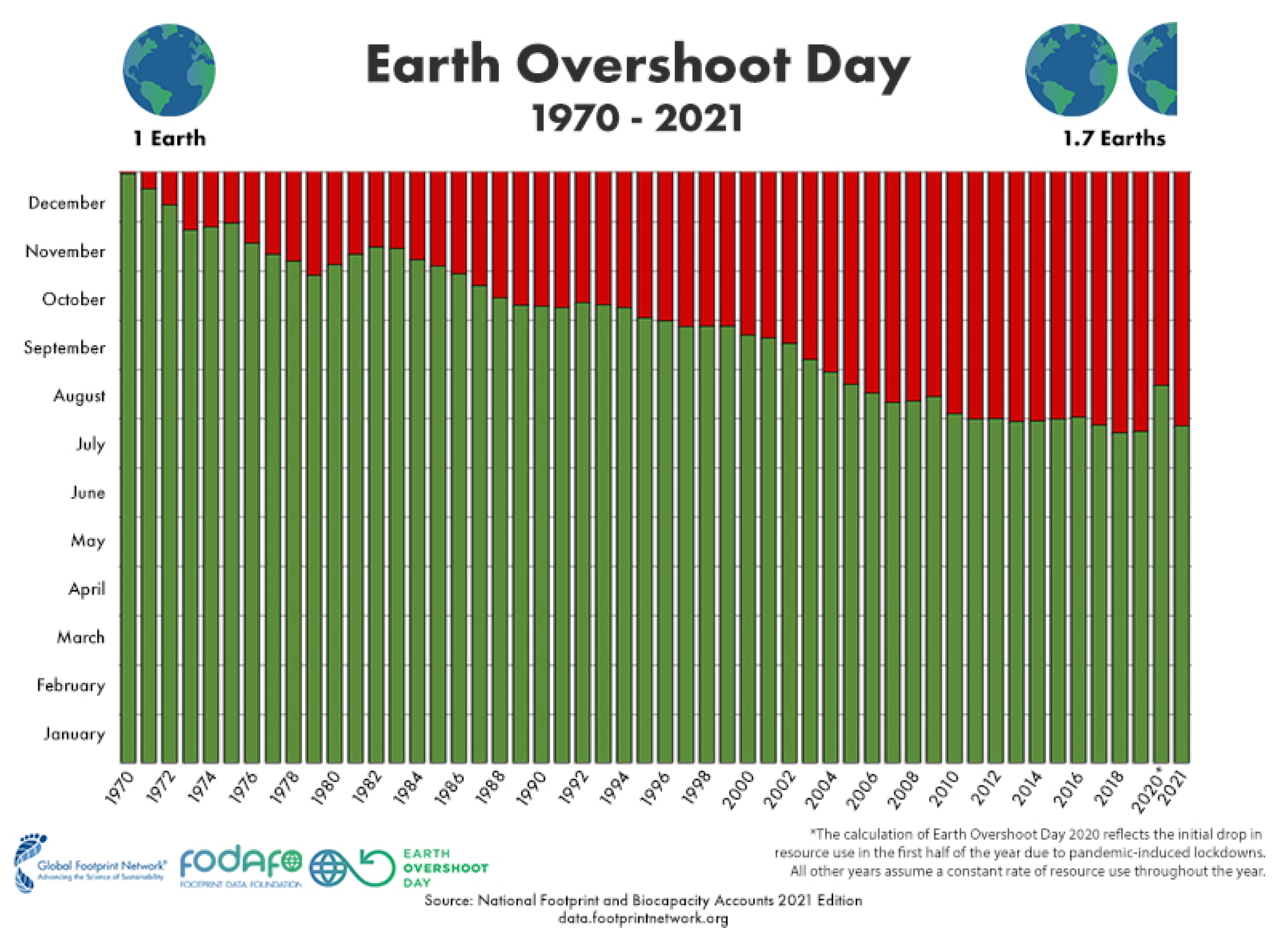
Graph showing Earth Overshoot Day, 1970-2021. Each year, Earth Overshoot Day marks the date when humanity has used all the biological resources that Earth regenerates during the entire year. Humanity currently uses 74% more than what the planet’s ecosystems can regenerate—or “1.7 Earths.” From Earth Overshoot Day until the end of the year, humanity operates on ecological deficit spending. This spending is currently some of the largest since the world entered into ecological overshoot in the early 1970s, according to the National Footprint & Biocapacity Accounts (NFA) based on UN datasets. Graphic: Global Footprint Network

Earth Overshoot Day creeps back to July 29 in 2021 – “With almost half a year remaining, we will already have used up our quota of the Earth’s biological resources for 2021 by July 29th”

GLASGOW, UK, 4 June 2021 (Global Footprint Network) – Earth Overshoot Day 2021 lands on July 29, Councillor Susan Aitken, the Leader of Glasgow City Council, announced today on behalf of Global Footprint Network and the Scottish Environment Protection Agency (SEPA). “With almost half a year remaining, we will already have used up our quota […]

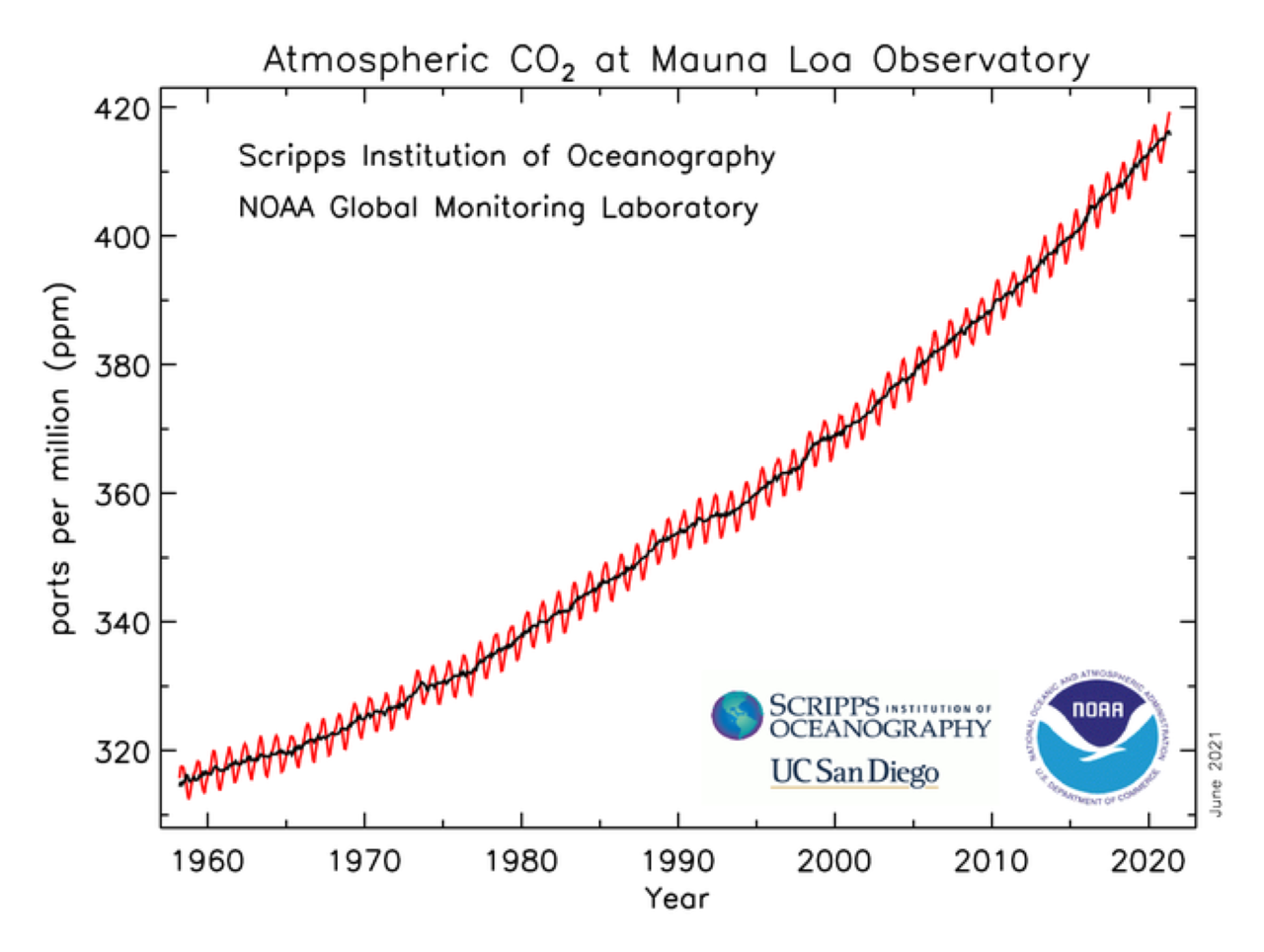
Atmospheric CO2 at Mauna Loa Observatory, 1958-2021. This graph depicts the upward trajectory of carbon dioxide in the atmosphere as measured at the Mauna Loa Atmospheric Baseline Observatory by NOAA and the Scripps Institution of Oceanography. The annual fluctuation is known as the Keeling Curve. Graphic: NOAA Global Monitoring Laboratory

Coronavirus barely slows rising carbon dioxide – Atmospheric CO2 peaks near 420 parts per million in 2021

7 June 2021 (NOAA) – Atmospheric carbon dioxide measured at NOAA’s Mauna Loa Atmospheric Baseline Observatory peaked for 2021 in May at a monthly average of 419 parts per million (ppm), the highest level since accurate measurements began 63 years ago, scientists from NOAA and Scripps Institution of Oceanography at the University of California San Diego announced today.  […]

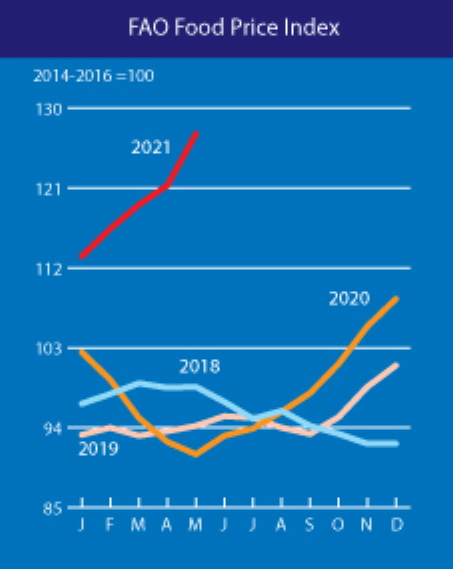
FAO Food Price Index, May 2020-May 2021. The FAO Food Price Index (FFPI) averaged 127.1 points in May 2021, 5.8 points (4.8 percent) higher than in April and as much as 36.1 points (39.7 percent) above the same period last year. The May increase represented the biggest month-on-month gain since October 2010. It also marked the twelfth consecutive monthly rise in the value of the FFPI to its highest value since September 2011, bringing the Index only 7.6 percent below its peak value of 137.6 points registered in February 2011. The sharp increase in May reflected a surge in prices for oils, sugar and cereals along with firmer meat and dairy prices. Graphic: UN FAO

Global food prices rise at rapid pace in May 2021 – Food Price Index hits highest value since September 2011, only 7.6 percent below its all-time peak

ROME, 4 June 2021 (FAO) – Global food prices rose in May at their fastest monthly rate in more than a decade, even as world cereal production is on course to reach a new record high, the Food and Agriculture Organization of the United Nations (FAO) reported today. The FAO Food Price Index averaged 127.1 points in […]

Annual Greenhouse Gas Index (AGGI), 1750-2020. For 2020, the AGGI was a record high 1.47, representing an increase in total direct radiative forcing of 47 percent since 1990. This increase in CO2 is accelerating — while it averaged about 1.6 ppm per year in the 1980s and 1.5 ppm per year in the 1990s, the growth rate increased to 2.4 ppm per year during the last decade (2009-2020). Pre-1978 changes in the CO2-equivalent abundance and AGGI based on the ongoing measurements of all greenhouse gases reported here, measurements of CO2 going back to the 1950s from C.D. Keeling [Keeling et al., 1958], and atmospheric changes derived from air trapped in ice and snow above glaciers [Machida et al., 1995, Battle et al., 1996, Etheridge, et al., 1996; Butler, et al., 1999]. Equivalent CO2 atmospheric amounts (in ppm) are derived with the relationship between CO2 concentrations and radiative forcing from all long-lived greenhouse gases. Graphic: Butler and Montzka, 2021 / NOAA

Another record high for NOAA Annual Greenhouse Gas Index in 2020 – CO2 increase continues accelerating – No slowdown from Covid pandemic seen

26 May 2021 (NOAA) – […] The atmospheric abundance of CO2 has increased by an average of 1.85 ppm per year over the past 41 years (1979-2020). This increase in CO2 is accelerating — while it averaged about 1.6 ppm per year in the 1980s and 1.5 ppm per year in the 1990s, the growth rate increased to […]

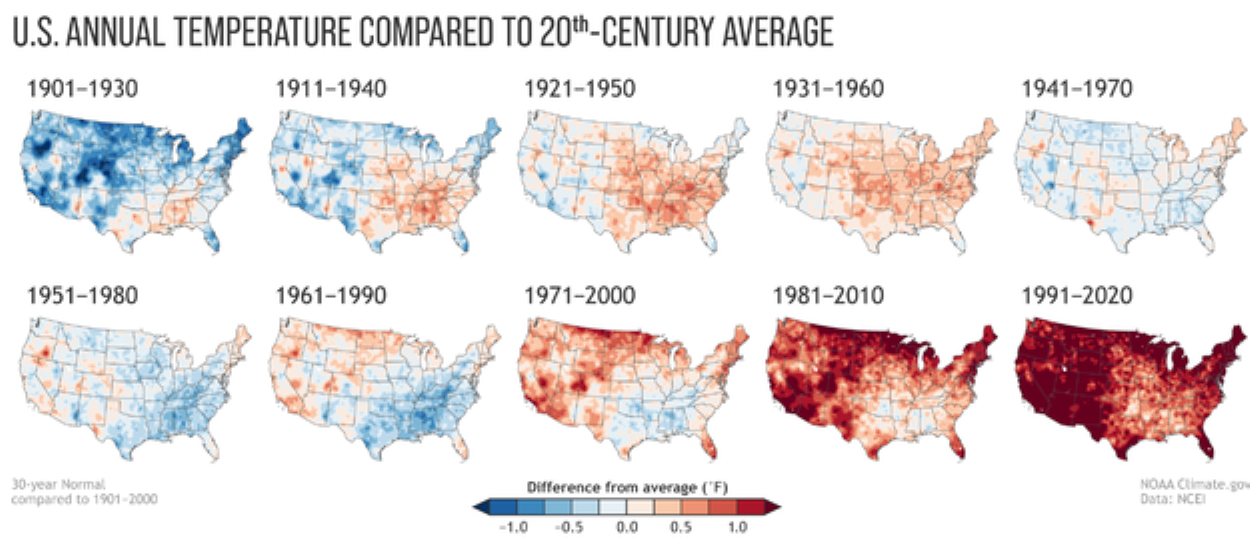
U.S. annual temperatures compared with 20th-century averages, 1901-2020. Each map shows the 30-year average temperatures compared with the 1901-2000 average. Data: NCEI. Graphic: CBS News

NOAA’s “new normal” climate report is anything but normal – “We’re really seeing the fingerprints of climate change in the new normals”

By Jeff Berardelli 8 May 2021 (CBS News) – Just a quick glance at the new U.S. Climate Normals maps published by the National Oceanic and Atmospheric Administration (NOAA) on Tuesday is enough for most climate scientists to say, “I told you so.” And it’s not just because the maps show a warmer and wetter […]

Social media & sharing icons powered by UltimatelySocial