Media article co-visibility network-individual level. Clustered representation of the co-visibility network: nodes are climate change contrarians (CCCs) and climate change scientists (CCSs) who have at least one media article associated with at least one other individual. Links are colored according to three types: links between members of the CCC (CCS) group are red (blue) and links between groups are black; the percentages of links by type are reported in parentheses (e.g., 52 percent of links are within the CCC group). We used a modularity-maximizing clustering algorithm48 to identify three communities, with nodes ordered along each spine according to its network centrality—as such, the most prominent individuals are located at the apex. Two communities are well mixed, whereas the third represents an extremely polarized echo chamber comprised primarily of CCC. (inset) Magnification of the apex showing the most prominent individuals. Graphic: Peterson, et al., 2019 / Nature Communications

Media coverage creates false balance on climate science, study shows – “Climate change contrarians” receive 49 percent more media coverage than scientists

By Lorena Anderson 13 August 2019 (UC Merced) – The American media lends too much weight to people who dismiss climate change, giving them legitimacy they haven’t earned, posing serious danger to efforts aimed at raising public awareness and motivating rapid action, a new study shows. While it is not uncommon for media outlets to […]

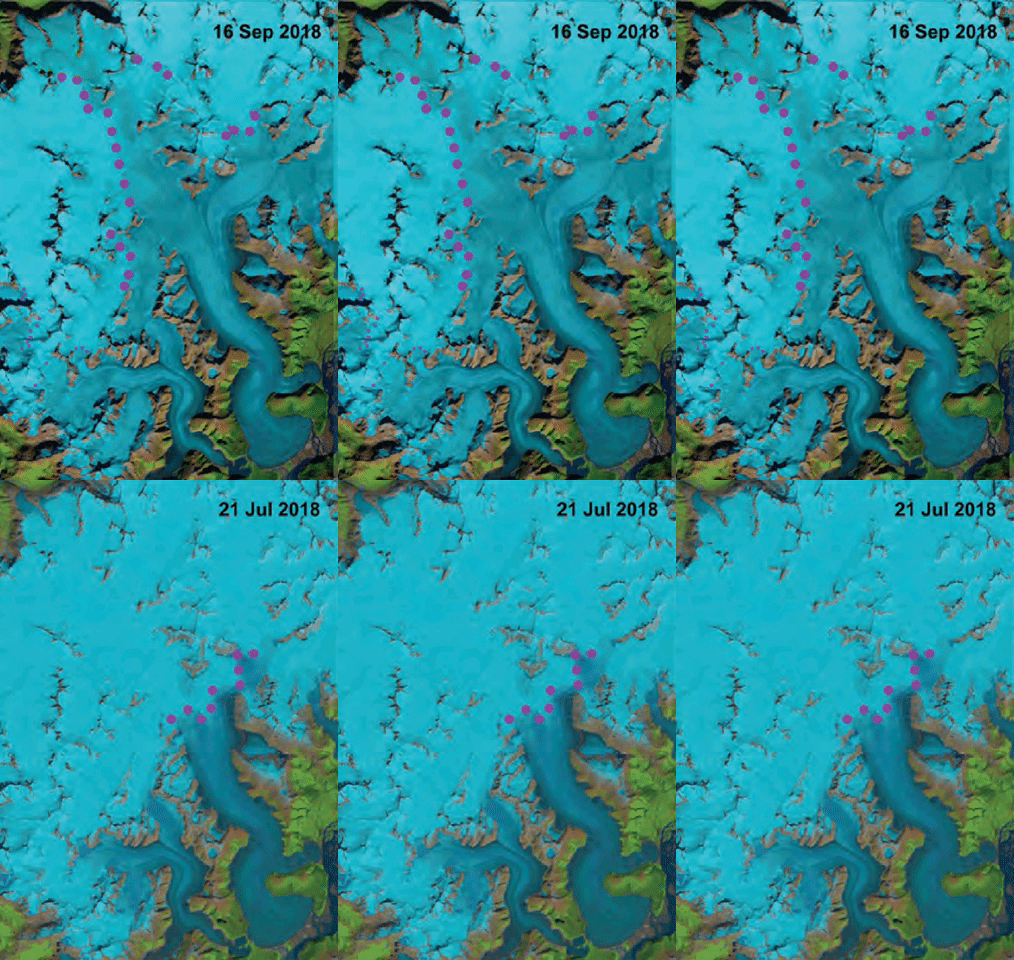
Landsat 8 images from 21 July 2018 (left) and 16 September 2018 (right) illustrating the Taku Glacier transient snowline. The 21 July 2018 snowline is at 975 m and the 16 September 2018 snowline is at 1400 m. Average end-of-summer snowline is 975 m; the 2018 end-of-summer snowline was the highest observed in the 73-year record. Graphic: AMS

State of the Climate in 2018: 2018 was the fourth-hottest year on record, behind 2016, 2015, and 2017

12 August 2019 (NCEI) – A new State of the Climate report [pdf] confirmed that 2018 was the fourth warmest year in records dating to the mid-1800s. Last year was the fourth warmest year on record despite La Niña conditions early in the year and the lack of a short-term warming El Niño influence until […]

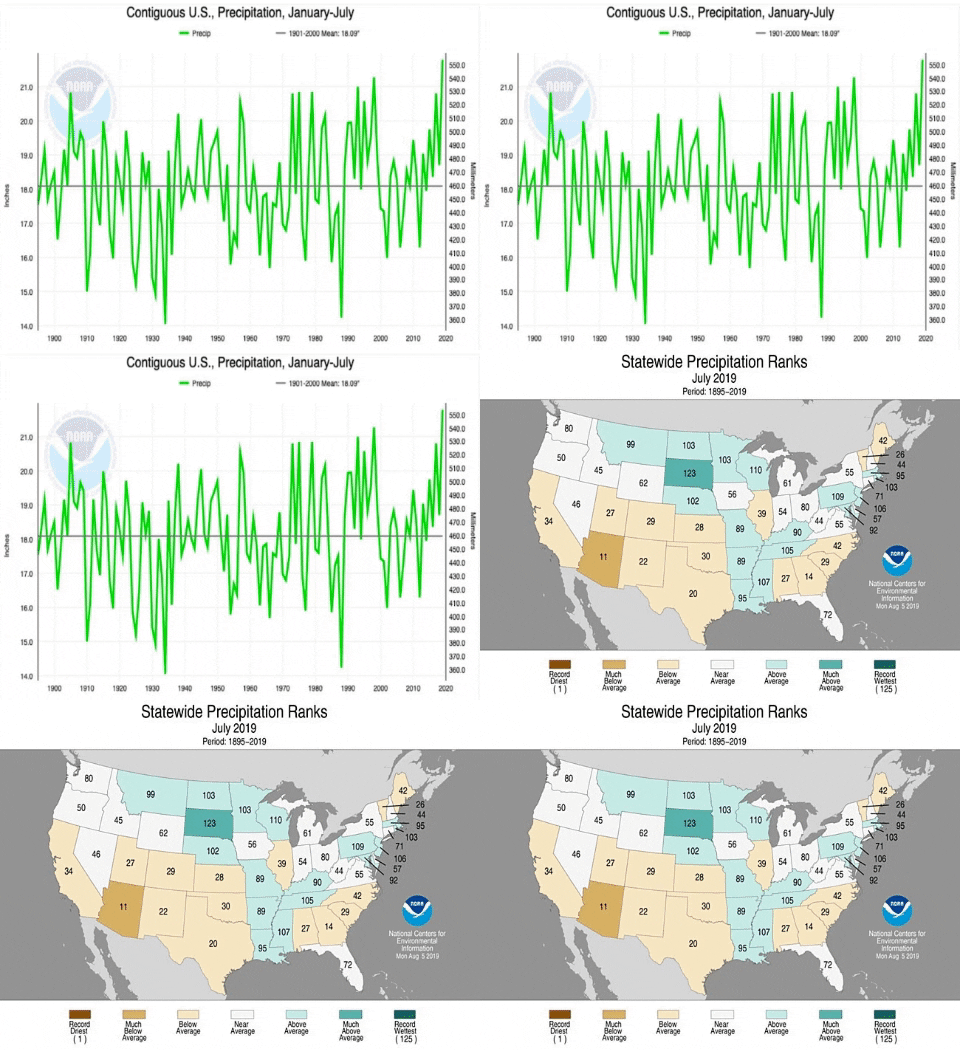
Graphs showing total precipitation averaged across the 48 contiguous U.S. states from January to July, 1895-2019; Statewide rankings for average precipitation for July 2019, as compared to each July since records began in 1895; and Statewide rankings for average temperature for July 2019, as compared to each July since records began in 1895. Graphic: NOAA / NCEI

U.S. racks up wettest calendar year to date in July 2019

By Bob Henson 7 August 2019 (Weather Underground) – The Big U.S. Wet of 2018-19 went on cruise control in July, but the year so far managed to hang on as the nation’s wettest calendar year to date in records going back more than a century, NOAA reported on Wednesday. Averaged across the 48 contiguous states, the […]

A bald eagle, one of the Endangered Species Act’s success stories, near Castle Dale, Utah. Photo: Brandon Thibodeaux / The New York Times

Trump Administration weakens protections for endangered species – “If we make decisions based on short-term economic costs, we’re going to have a whole lot more extinct species”

By Lisa Friedman 12 August 2019 WASHINGTON (The New York Times) – The Trump administration on Monday announced that it would change the way the Endangered Species Act is applied, significantly weakening the nation’s bedrock conservation law credited with rescuing the bald eagle, the grizzly bear and the American alligator from extinction. The changes could […]

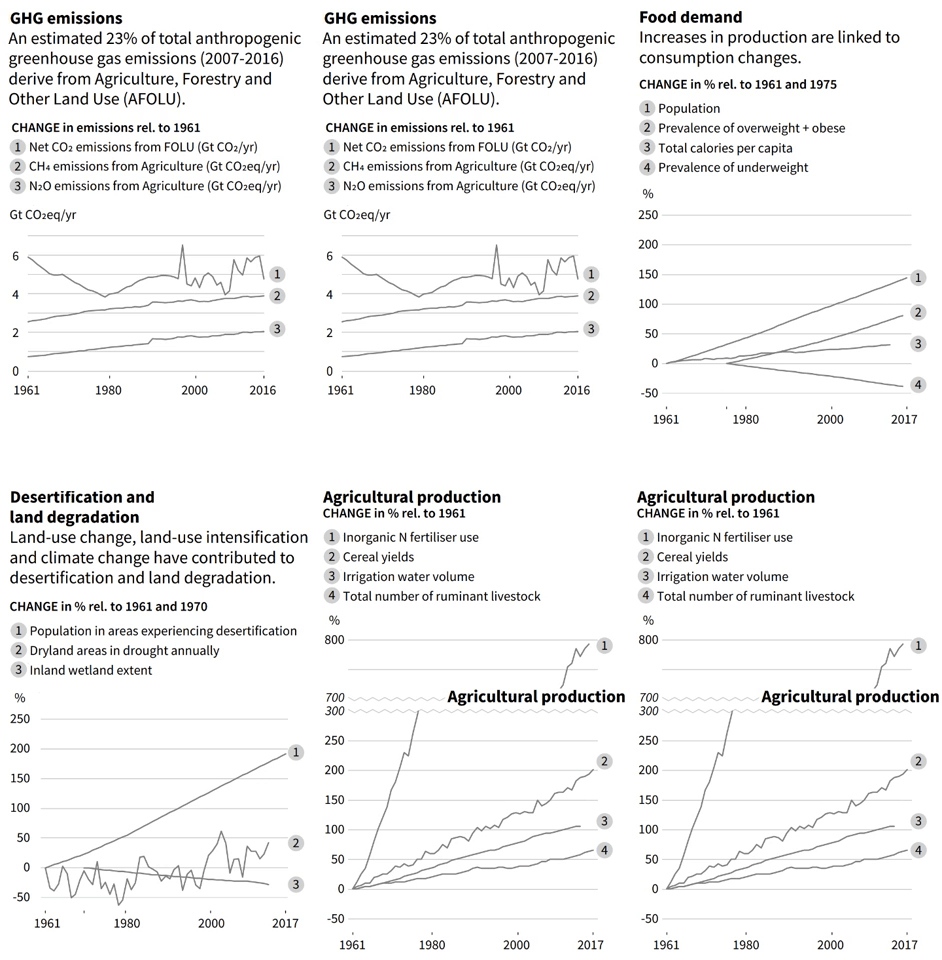
Graphs from the “Climate Change and Land 2019” report by the IPCC, showing changes relative to 1961 of greenhouse gas (GHG) emissions, world agricultural production, food demand, and desertification and land degradation. Graphic: IPCC

World food security increasingly at risk due to “unprecedented” climate change impact, new UN report warns

8 August 2019 (UN News) – More than 500 million people today live in areas affected by erosion linked to climate change, the UN warned on Thursday, before urging all countries to commit to sustainable land use to help limit greenhouse gas emissions before it is too late. Speaking at the launch of a Special […]

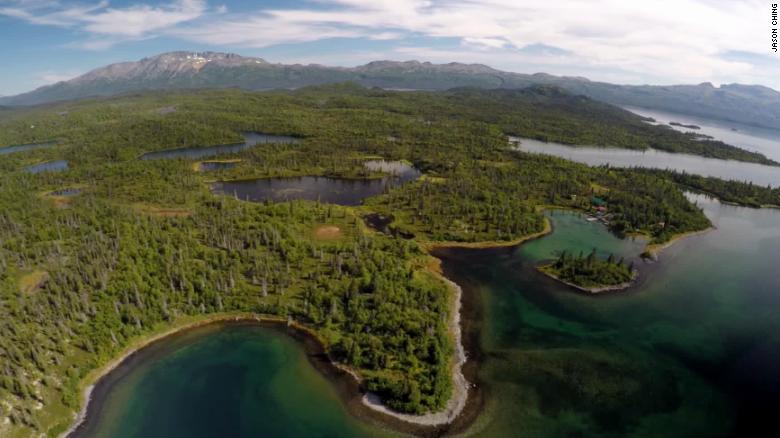
Aerial view of Bristol Bay, Alaska. A controversial mining project that was all but killed by the Obama administration is now moving forward under President Trump's EPA. Photo: Jason Ching / CNN

EPA dropped salmon protection after Trump met with Alaska governor – Scientists dumbfounded at gold mine approval that will cause “complete loss of fish habitat” – “We were told to get out of the way and just make it happen”

By Scott Bronstein, Curt Devine, Drew Griffin, and Ashley Hackett 9 August 2019 (CNN) – The Environmental Protection Agency told staff scientists that it was no longer opposing a controversial Alaska mining project that could devastate one of the world’s most valuable wild salmon fisheries just one day after President Trump met with Alaska’s governor, […]

A thermometer show the temperature of over 40 degrees at the Volklingen Ironworks in Volklingen, Germany on 24 July 2019. Photo: Harald Tittel / AFP / Getty Images

AccuWeather misleads on global warming and heat waves, a throwback to its past climate denial

By Jason Samenow and Andrew Freedman 9 August 2019 (The Washington Post) – A week after a punishing heat wave torched the eastern two-thirds of the country, setting numerous records, AccuWeather chief executive Joel Myers cast doubt on the scientific finding that heat waves in the United States and elsewhere are worsening because of climate change. […]

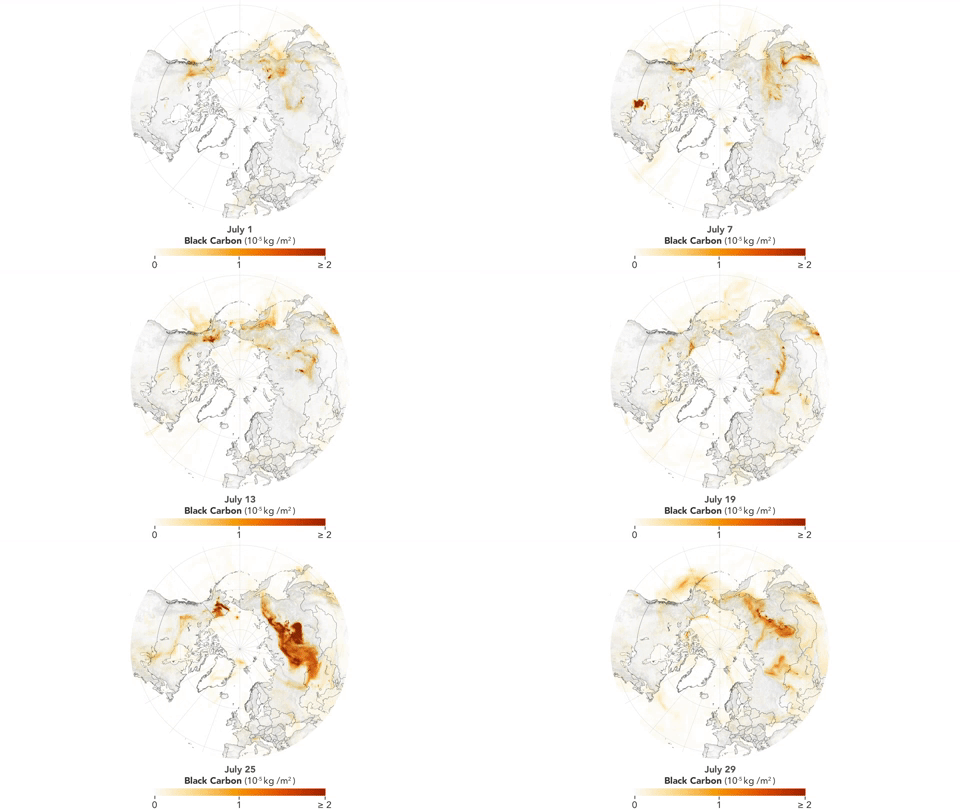
Animation showing the concentration of black carbon particulates — commonly called soot — around the Arctic from 1 July 2019 to 29 July 2019. Graphic: Lauren Dauphin / NASA Earth Observatory

Arctic fires fill Northern Hemisphere skies with soot

By Kasha Patel 1 August 2019 (NASA) – In June and July 2019, more than 100 long-lived and intense wildfires blazed within the Arctic Circle. Most of them burned in Alaska and Siberia, though a few raged even in Greenland. As these fires lofted thick plumes of smoke into the skies, they also launched megatons of tiny, harmful particles into the […]

Targets of violent extremists in the U.S. in 2018. The largest percentage of attacks was against African Americans (“Black People”). Graphic: New Jersey Office of Homeland Security Preparedness (NJOHSP)

Here’s the data on U.S. white supremacist terrorism the Trump administration has been “unable or unwilling” to give to Congress

By Jana Winter and Hunter Walker 8 August 2019 WASHINGTON (Yahoo News) – Alleged white supremacists were responsible for all race-based domestic terrorism incidents in 2018, according to a government document distributed earlier this year to state, local and federal law enforcement. The document, which has not been previously reported on, becomes public as the […]

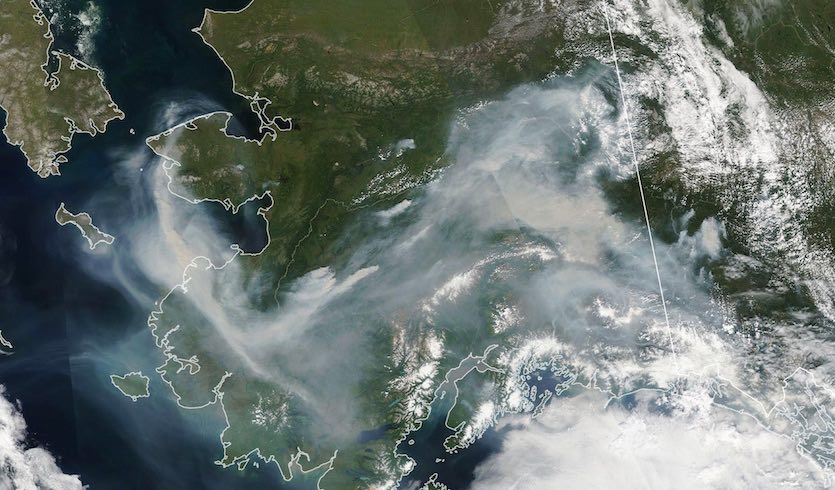
The Moderate Resolution Imaging Spectroradiometer (MODIS) on NASA’s Aqua satellite captured an image of thick wildfire smoke swirling over the state on 8 July 2019. Meteorologists in Fairbanks reported visibility had dropped to less than one mile due to smoke, and air quality sensors in the city reported skyrocketing levels of particulates in the air. Photo: NASA Earth Observatory

Baked Alaska: State endures warmest month on record in July 2019

By Christopher C. Burt 9 August 2019 (Weather Underground) – July 2019 was the warmest month on record for the state of Alaska, smashing the previous record by almost one full degree Fahrenheit and leaving numerous local records for hottest day and warmest month in the superheated dust. Records for statewide average temperatures date back […]

Social media & sharing icons powered by UltimatelySocial