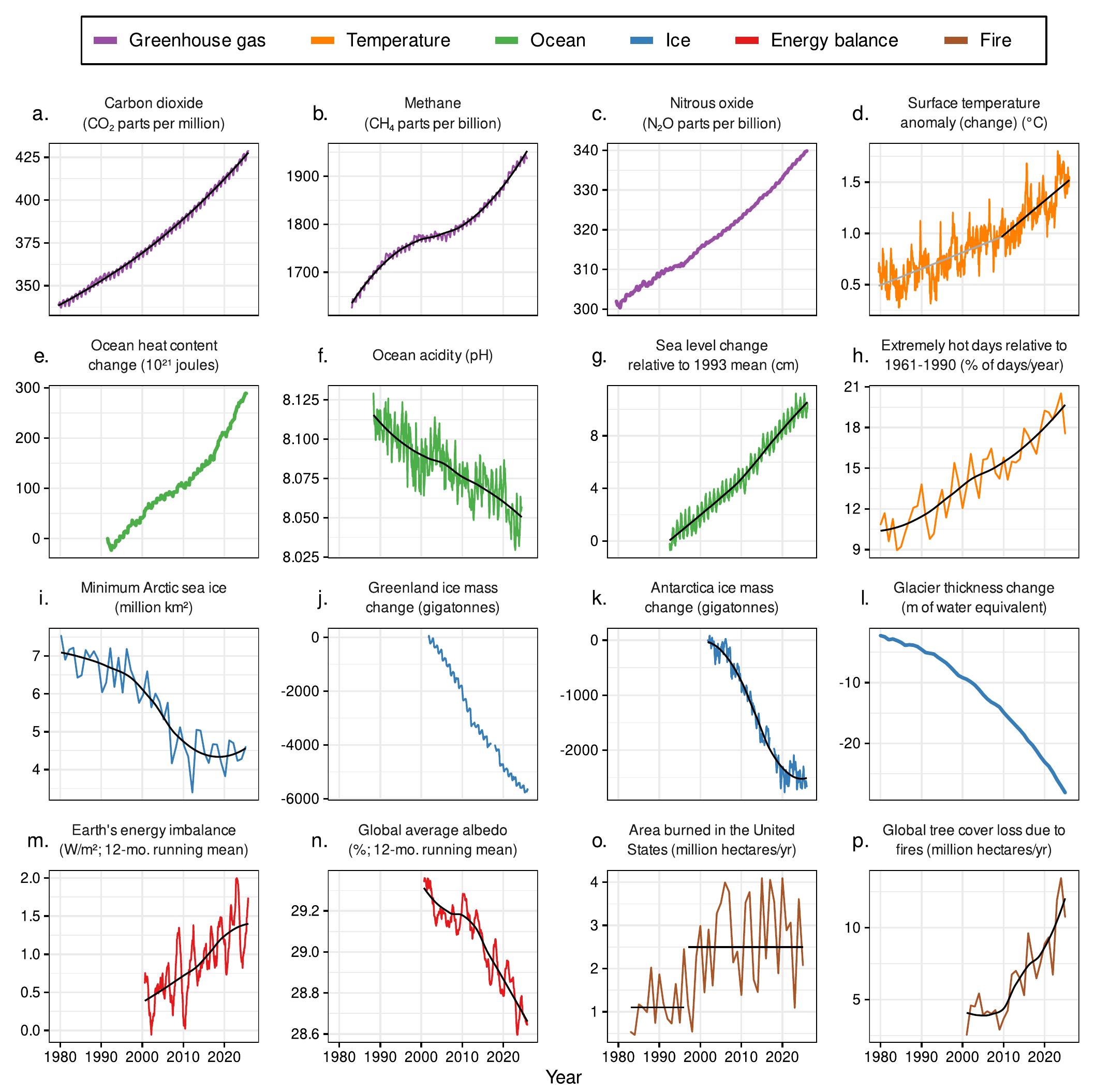
Time series of climate-related responses, the planetary vital signs, 1980-2026. Of 16 vital signs spanning greenhouse gas concentrations, temperatures, the oceans, ice, energy balance, and wildfire, 7 (44 percent) are currently at record extremes, and several show evidence of acceleration or abrupt shifts. For surface temperature anomaly (d), estimates based on a segmented linear regression model are shown in gray (prior to 2010) and black (beginning in 2010). For area burned (o), the black horizontal lines show changepoint model estimates, which indicate abrupt shifts. For other variables with relatively high variability, local regression trendlines are shown in black. The variables were measured at various frequencies (e.g., annual, monthly, weekly). The labels on the x-axis correspond to midpoints of years. Graphic: Ripple, et al., 2026 / BioScience

Seven of 16 planetary vital signs are at record extremes, scientists report – Global warming has accelerated to 0.36°C per decade since 2010, and 2°C could be reached before 2050 – “This is no longer a warning for the future; it is a diagnosis of the present”

14 October 2026 (BioScience) – We are witnessing the rapid destabilization of the Earth’s climate system. This is no longer a warning for the future; it is a diagnosis of the present. Earth’s life-support systems are being pushed beyond stable limits, with changes unfolding faster than our ability to respond. Human activities are driving profound […]

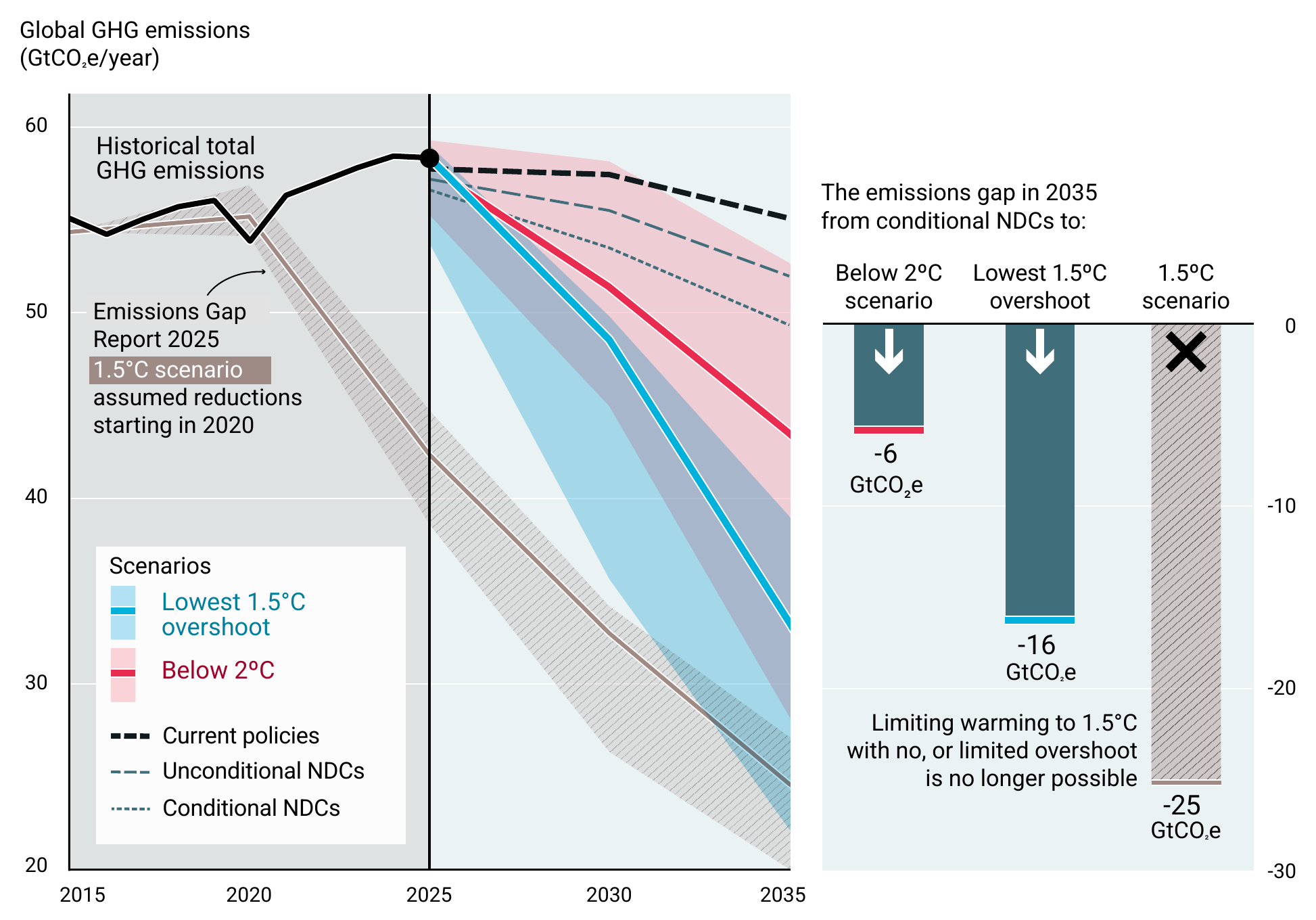
Global greenhouse gas (GHG) emissions under different scenarios, 2015-2035, and the emissions gap in 2035 with respect to the below 2°C and lowest 1.5°C overshoot scenarios. Limiting warming to 1.5°C with no or limited overshoot is no longer possible. The gap in 2035 between full implementation of the conditional nationally determined contributions (NDCs) and the lowest 1.5°C overshoot scenario is 16 GtCO2e; the gap to the below 2°C scenario is 6 GtCO2e. The hatched grey band is the 1.5°C scenario of the Emissions Gap Report 2025, which assumed reductions starting in 2020; the gap to it from conditional NDCs would have been 25 GtCO2e. Graphic: UNEP

UN Emissions Gap Report: exceedance of 1.5°C is now “imminent and unavoidable” – Emissions hit 58.4 GtCO2e in 2025; current policies lead to 2.8°C by 2100 – “The opportunity to bridge the 1.5°C emissions gap with ‘no or limited’ overshoot has been lost”

21 October 2026 (UNEP) – The headline finding of this seventeenth Emissions Gap Report is sobering. The opportunity to bridge the 1.5°C emissions gap with ‘no or limited’ overshoot has been lost. Decades of insufficient mitigation action means that larger exceedance of 1.5°C above pre-industrial levels based on multidecadal averages is now imminent and unavoidable. […]

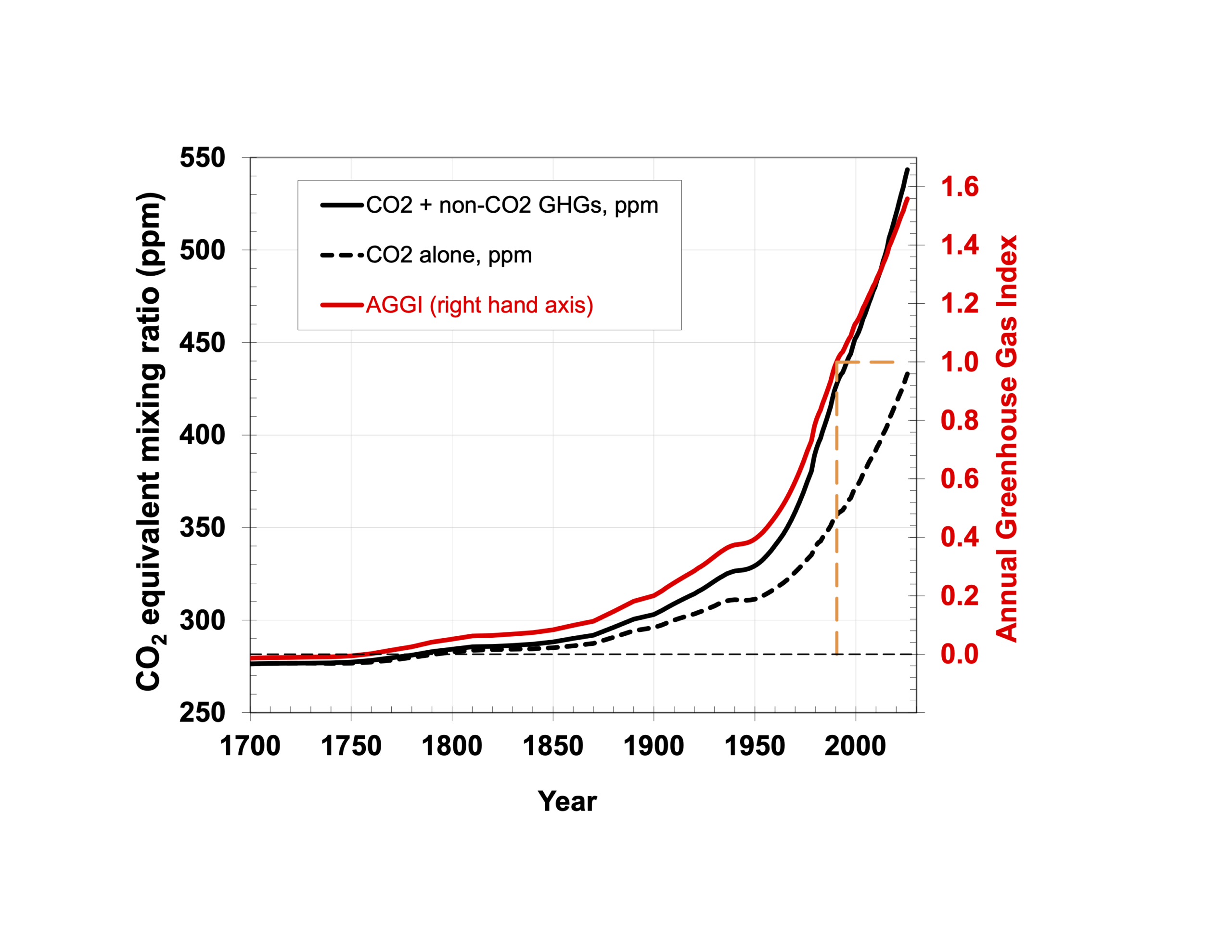
Annual Greenhouse Gas Index (AGGI), 1700-2025. For 2025, the AGGI was a record high 1.56, representing a 56 percent increase in effective radiative forcing from long-lived greenhouse gases since 1990. Time series since 1700 for atmospheric CO2 abundance (black dashed line), CO2-equivalent abundance based on ongoing measurements of all greenhouse gases reported here (black line), and the AGGI (red line, right-hand scale). The measurements of CO2 between the 1950s and 1978 are from C.D. Keeling [Keeling et al., 1958]. Prior to 1978, atmospheric abundances represent values derived from air trapped in ice and snow above glaciers [Machida et al., 1995, Battle et al., 1996, Etheridge et al., 1996; Butler et al., 1999]. The dashed orange lines highlight the AGGI reference year (1990) at which the index is normalized to a value of 1.0. Graphic: NOAA Global Monitoring Laboratory

Another record high for NOAA Annual Greenhouse Gas Index in 2025 – Long-lived greenhouse gases trapped 56 percent more heat than in 1990 – Carbon dioxide reached 425.62 ppm, and its rate of increase has accelerated to 2.5 ppm per year

21 October 2026 (NOAA) – The AGGI quantifies radiative forcing from long-lived trace gases and its change over time. The index is derived from NOAA GML’s long-term measurements of greenhouse gas abundances in the remote atmosphere at sites across the globe; it is formulated to provide an understanding of the change in radiative forcing in […]

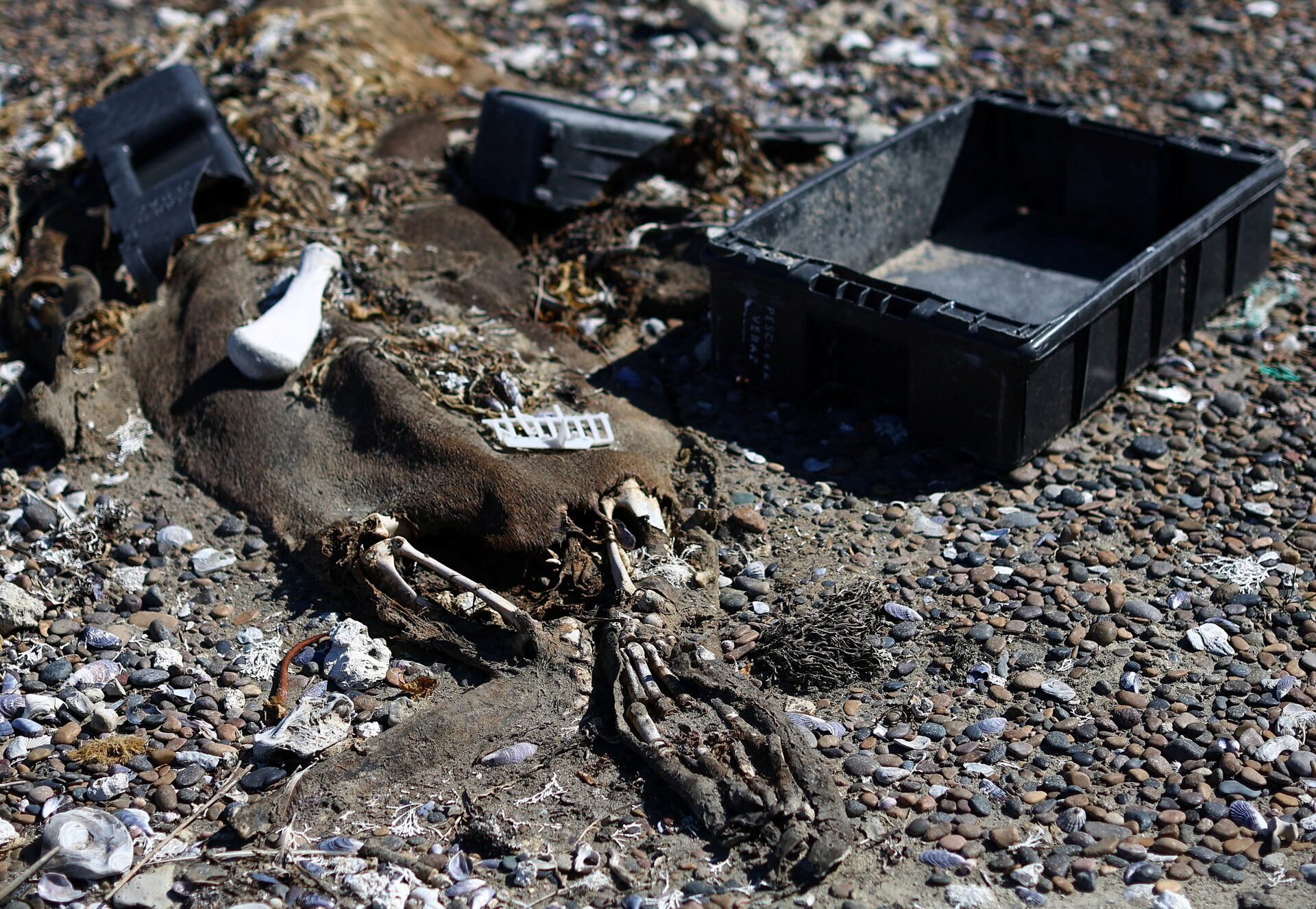
The carcass of an elephant seal is seen next to plastic garbage on a beach, in Pico Sayago, in the Patagonian province of Chubut, Argentina, 26 September 2024. Photo: Agustin Marcarian / REUTERS

Fishing waste chokes marine wildlife, threatens human health in Argentina’s Patagonia – Mountains of plastic waste from the fishing industry cover the coast along the Valdes Peninsula

By Miguel Lo Bianco 4 October 2024 VALDES PENINSULA, Argentina (Reuters) – Mountains of plastic waste from the fishing industry have covered the coast along the Valdes Peninsula in Argentina’s Patagonia, threatening the lives of sea lions, fish, penguins and whales and also endangering human health. The coasts of the peninsula on Argentina’s Atlantic coast, […]

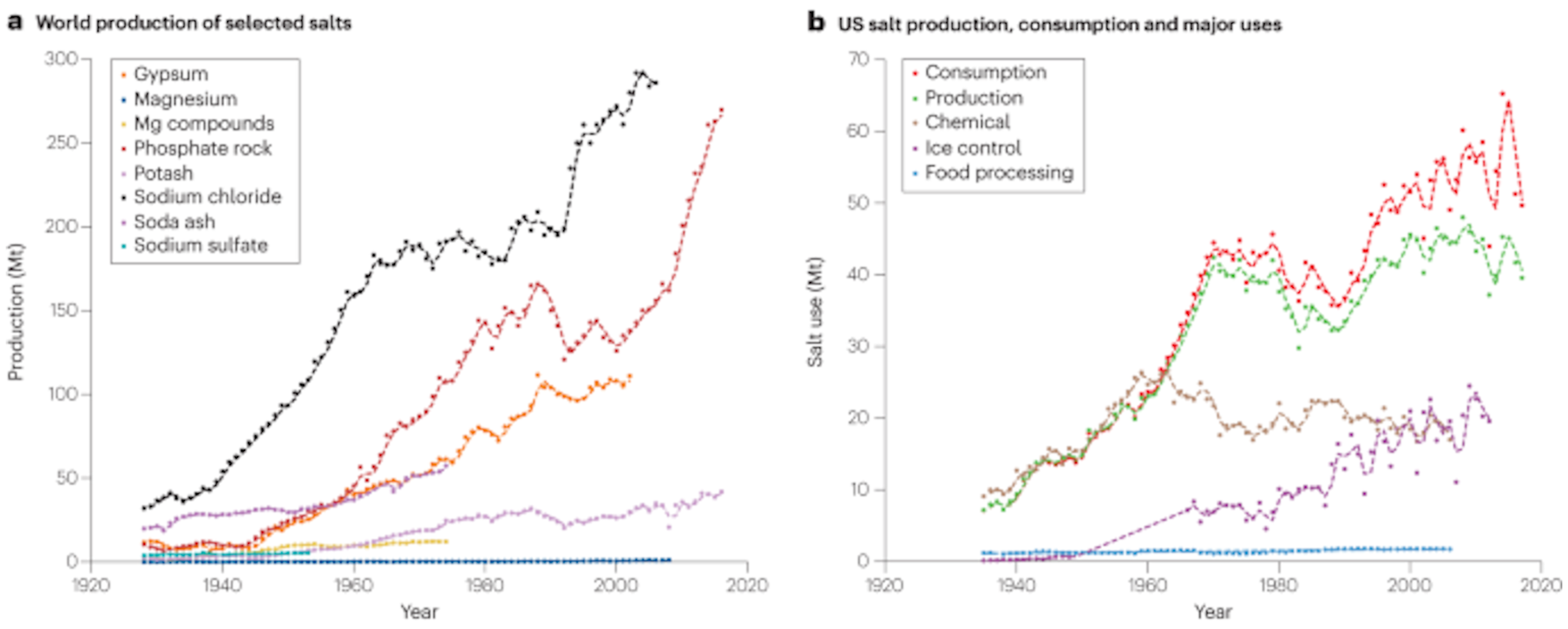
Production of selected salts in Mt/year for (a) the world and (b) the United States. Graphic: Graphic: Kaushal, et al., 2023 / Nature Reviews Earth and Environment

Humans are disrupting natural “salt cycle” on a global scale

31 October 2023 (University of Maryland) – The influx of salt in streams and rivers is an ‘existential threat,’ according to a research team led by a UMD geologist. The planet’s demand for salt comes at a cost to the environment and human health, according to a new scientific review led by University of Maryland Geology Professor Sujay Kaushal. Published […]

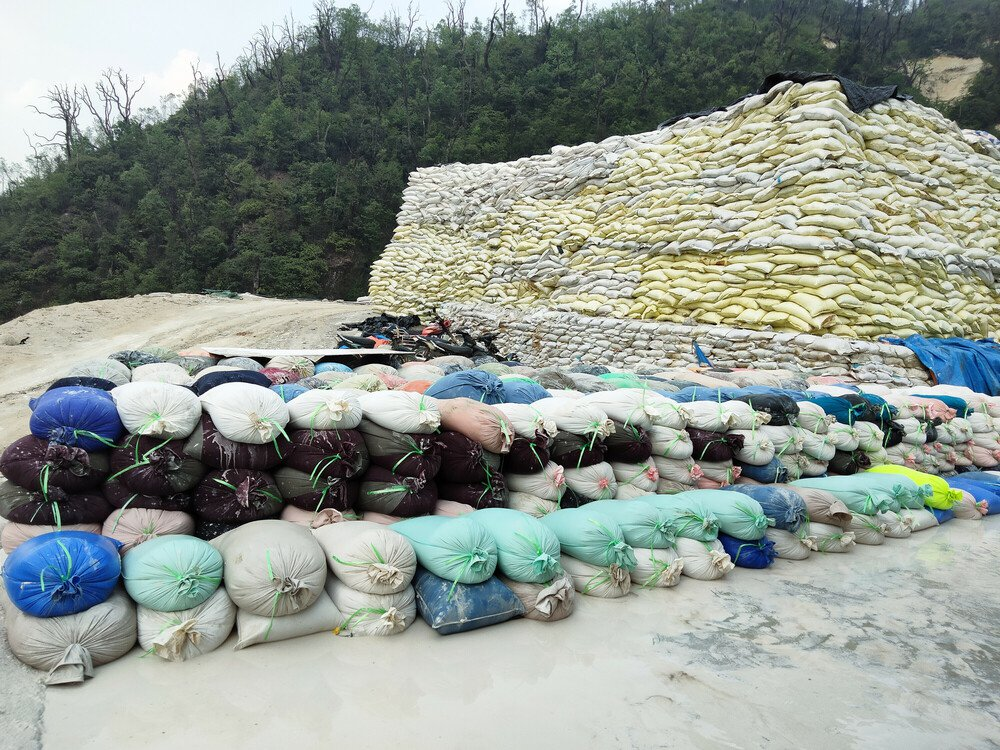
Myanmar’s rare earth mining industry has become the world’s largest supply, yet the mines’ toxic by-products are poisoning nearby waterways, wildlife, and communities. Photo: Global Witness

Transition minerals: A climate solution that could cost the earth – “We need a just, fair, and equitable transition from fossil fuels to renewables”

10 July 2024 (Global Witness) – Renewable energy is often hailed as a panacea for the energy crisis. But without better consultation and regulation, plans to expand mining for minerals central to the energy transition could be disastrous for people and the planet. To tackle the climate crisis, we need to transition away from fossil […]

Glow from Park Fire burns is seen along Cohasset Road near Chico, California, U.S. 25 July 2024. Photo: Fred Greaves / REUTERS

A “catastrophic” start to wildfire season in Oregon sparks alarm – Oregon wildfire explodes to half the size of Rhode Island – “This is perhaps the worst I’ve seen in terms of the number of fires on the landscape in the last decade in the state of Oregon”

By Jules Feeney 27 July 2024 LOS ANGELES (The Guardian) – Oregon’s wildfire season is off to an explosive start with more than 1 million acres charred in less than a month, as experts warn that extreme heat and unusual lightning strikes are creating “catastrophic conditions” for fires to ignite and spread. The state is currently […]

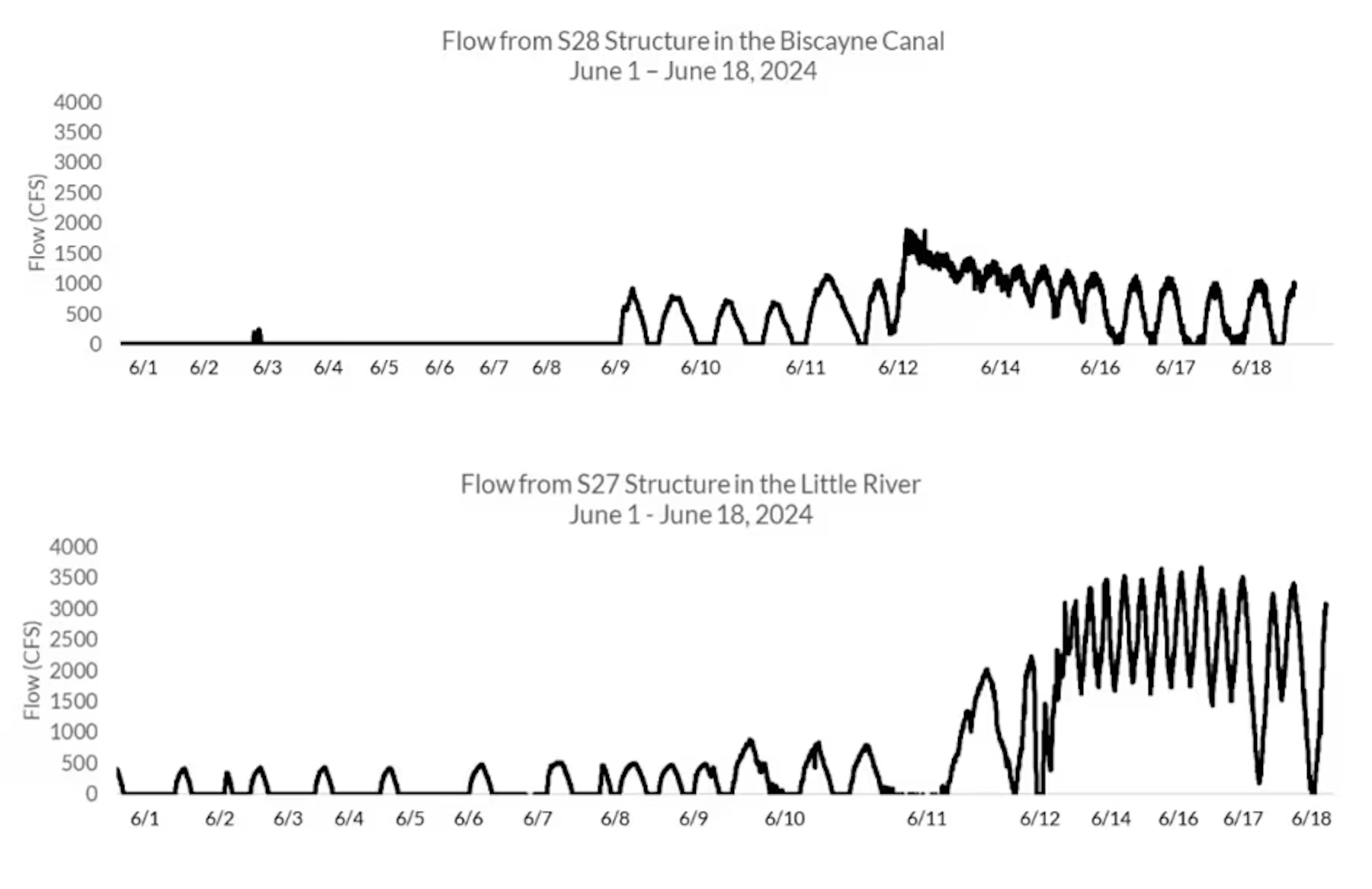
Stormwater flows into Biscayne Bay, 1 June 2024 - 18 June 2024. The flows from the Little River exceeded rates of 2000 cubic feet per second, causing very low salinity in the bay, resulting in large-scale fish kills. Graphic: Miami Waterkeeper

Record flooding yields massive fish kill in miles-long stretch of Biscayne Bay – “These events are anything but normal”

By Margaret Wong 23 July 2024 (The Cool Down) – Biscayne Bay is reeling from its fourth major fish kill in as many years, triggered by recent record flooding in South Florida.  What’s happening? Torrential rains have inundated the region, causing a significant influx of freshwater into the bay, which has led to low salinity […]

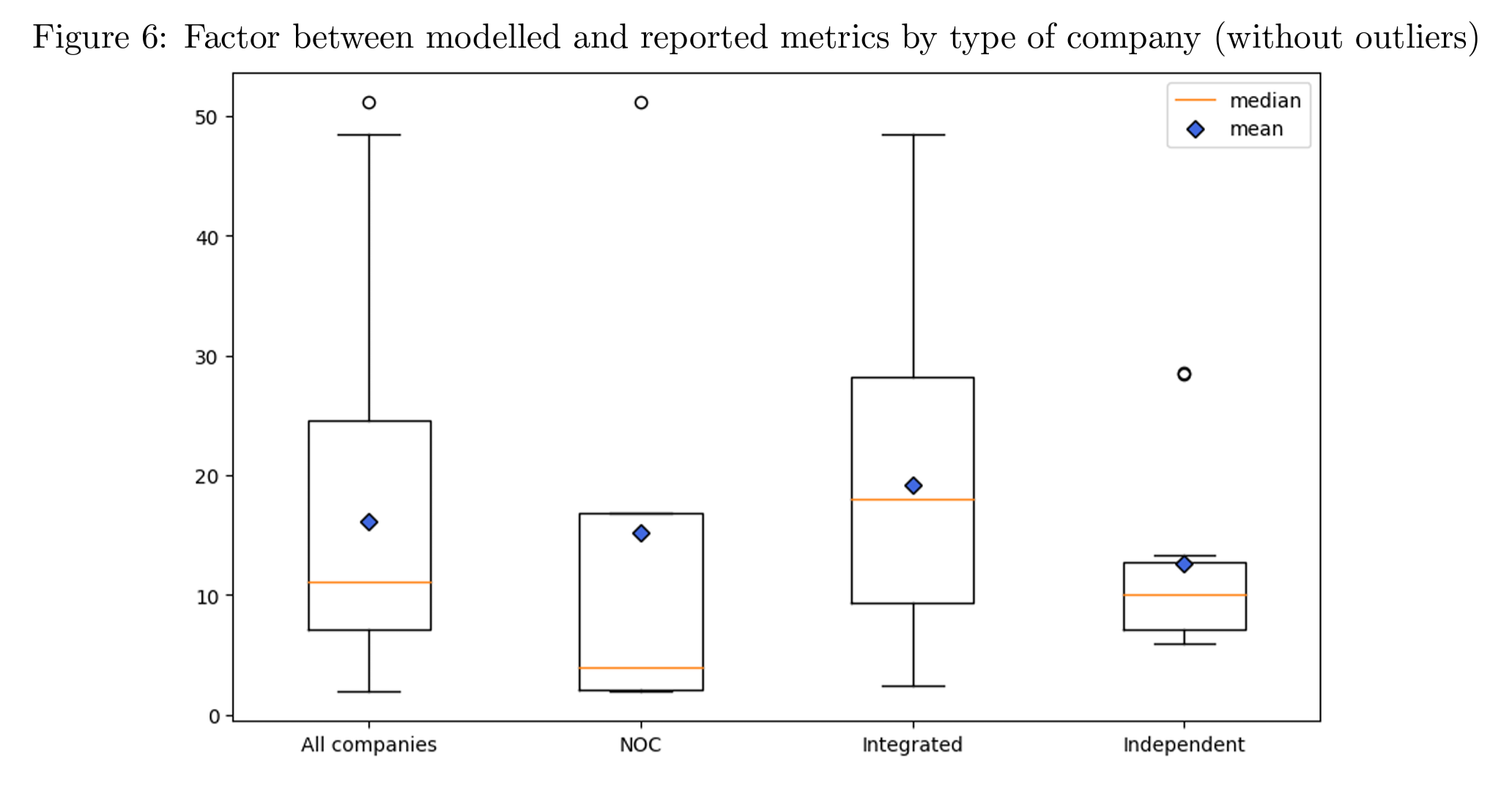
Difference between modelled and reported methane intensities by type of company. Modelled emissions are compared with the methane emissions reported by each company in its sustainability reporting or its public communication. The global average ratio on this set of companies is 16.1, with a relative standard deviation of 79.3 percent. Each type of company within this set does not contribute similarly to these global metrics. Integrated companies have the highest average ratio between model and reporting out of all the types of companies, at 19.2 and a relative standard deviation of 64.7 percent, which means that some Integrated companies reporting are much closer to the values for their corresponding model than others. National oil companies (NOCs) have the lowest median ratio with 4.0 but their average is the second highest at 15.2, strongly influenced by one of the companies in the category that has a factor of 51.2, while the remaining 4 have an average of 6.2. Independent companies have the lowest average with 12.6 and a relative standard deviation of 65.2 percent, which shows the importance of the regions of operation in the results of different models. Graphic: Peyle, et al., 2024

We used satellite imagery and AI to see who’s keeping their climate pledges – Almost none of the signatories of the Global Methane Pledge are following through on their commitment – On average, companies emit methane intensities 16 times larger than reported

By Antoine Rostand 17 July 2024 (Fortune) – Committing countries or companies to climate pledges doesn’t guarantee that those pledges will be honored. After all, the planet is getting a great deal hotter every year, with the record-breaking temperature in India in May just the latest example. If companies and countries were fully honoring their […]

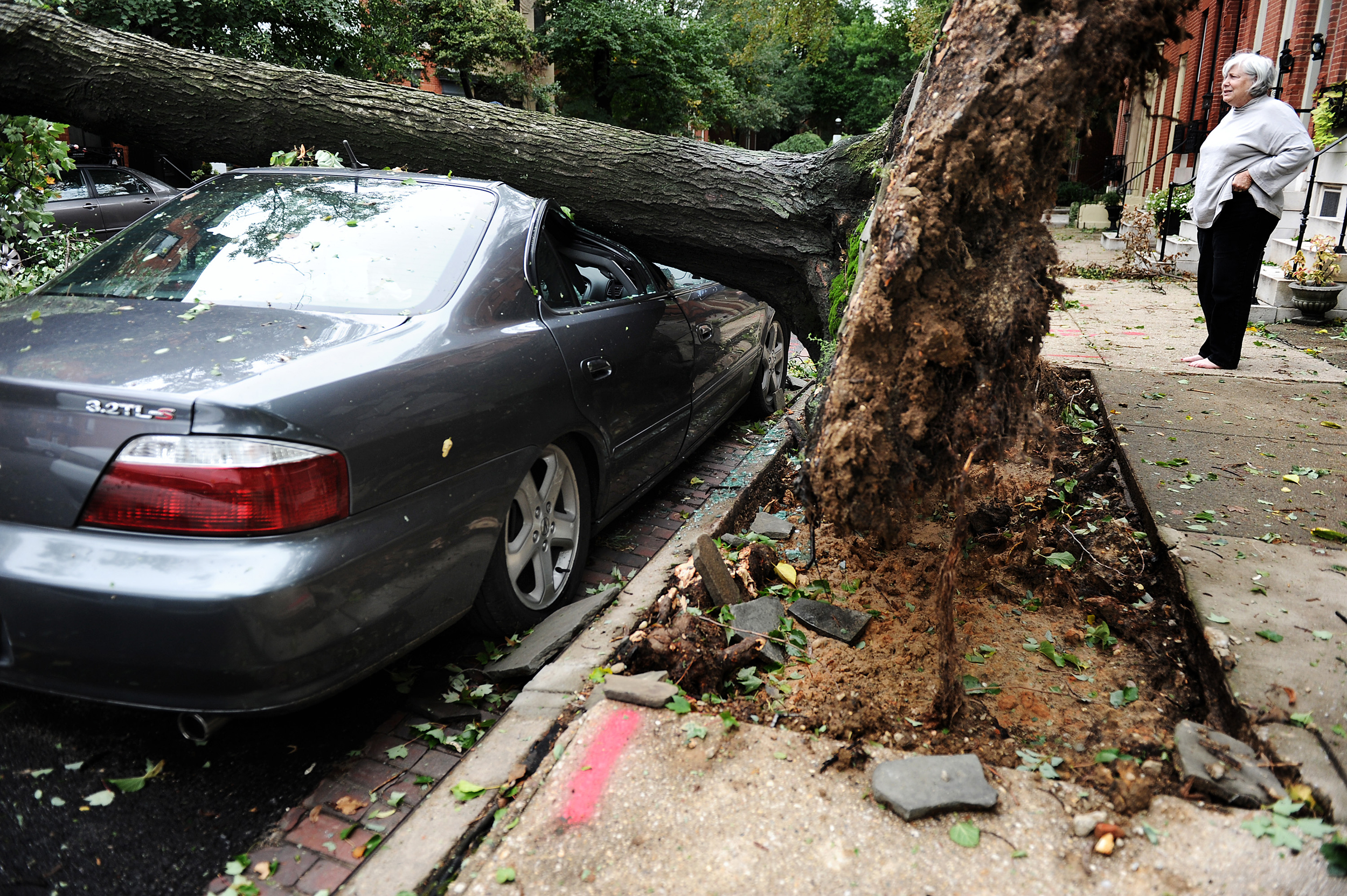
Neighbors look at a car crushed by a large tree in the wake of Hurricane Irene on 28 August 2011 in Baltimore, Maryland. Photo: Patrick Smith / Getty Images

Baltimore judge tosses climate case, hands win to Big Oil – “This decision is the oil companies’ dream. This is what they would love to happen to all those cases.”

By Aman Azhar 13 July 2024 (Inside Climate News) – In a first of its kind decision, a Maryland judge on Wednesday tossed Baltimore City’s climate suit against major oil giants on the grounds that it is not the role of the state courts to address a global issue like climate change. Originally filed in […]
Social media & sharing icons powered by UltimatelySocial