U.S. Surgeon General calls for action regarding the ongoing “epidemic of loneliness and isolation”
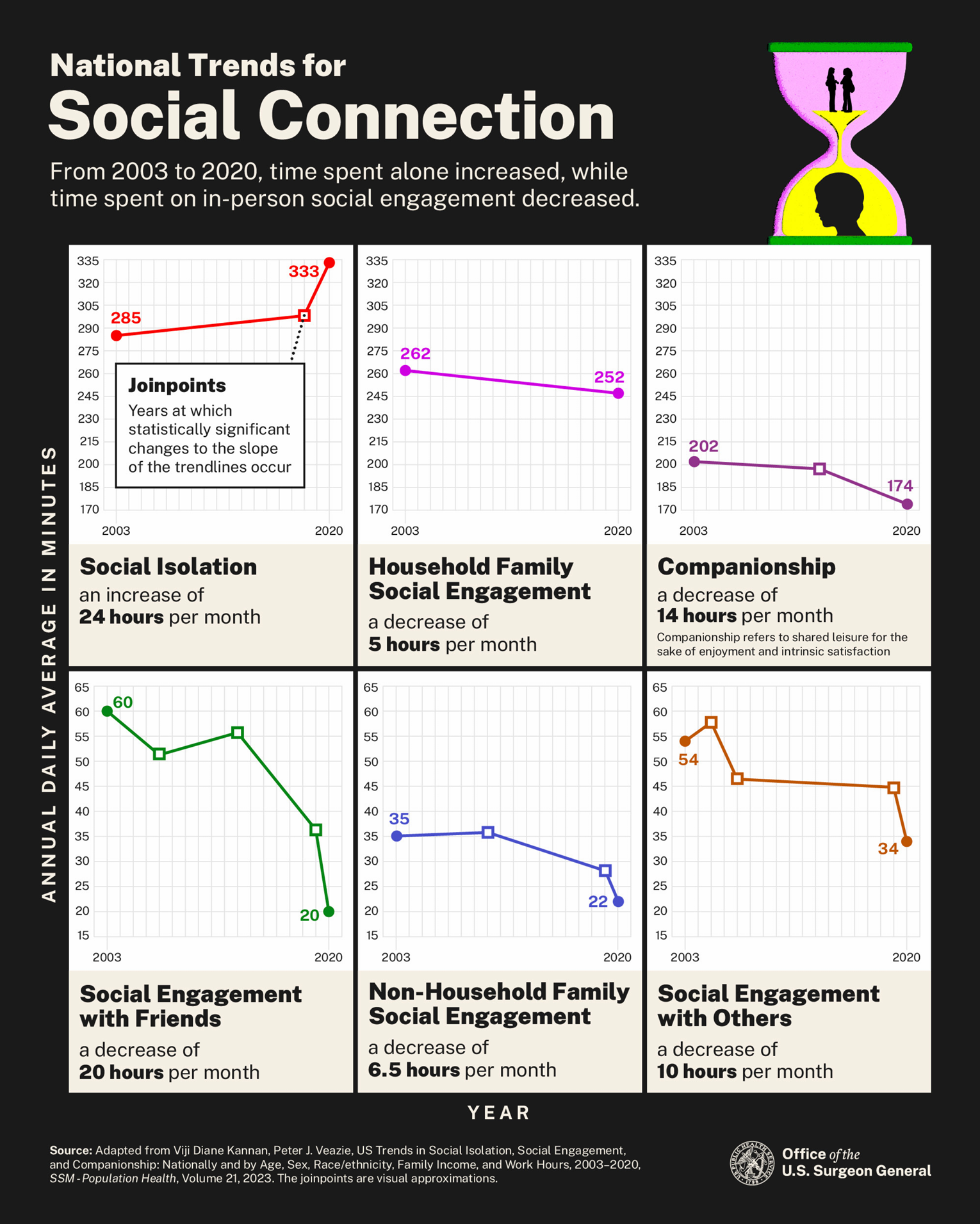
National trends for social connection in the United States, 2003-2020. Social networks are getting smaller, and levels of social participation are declining distinct from whether individuals report that they are lonely. For example, objective measures of social exposure obtained from 2003-2020 find that social isolation, measured by the average time spent alone, increased from 2003 (285-minutes/day, 142.5-hours/month) to 2019 (309-minutes/day, 154.5-hours/month) and continued to increase in 2020 (333-minutes/day, 166.5-hours/month). This represents an increase of 24 hours per month spent alone. At the same time, social participation across several types of relationships has steadily declined. For instance, the amount of time respondents engaged with friends socially in-person decreased from 2003 (60-minutes/day, 30-hours/month) to 2020 (20-minutes/day, 10-hours/month). This represents a decrease of 20 hours per month spent engaging with friends. This decline is starkest for young people ages 15 to 24. For this age group, time spent in-person with friends has reduced by nearly 70 percent over almost two decades, from roughly 150 minutes per day in 2003 to 40 minutes per day in 2020. The COVID-19 pandemic accelerated trends in declining social participation. The number of close friendships has also declined over several decades. Among people not reporting loneliness or social isolation, nearly 90% have three or more confidants. Yet, almost half of Americans (49 percent) in 2021 reported having three or fewer close friends — only about a quarter (27 percent) reported the same in 1990. Social connection continued to decline during the COVID-19 pandemic, with one study finding a 16 percent decrease in network size from June 2019 to June 2020 among participants. Graphic: Office of the U.S. Surgeon General
By Emma Egan 2 May 2023
(ABC News) – The U.S. Surgeon General released an advisory on Tuesday calling attention to the public health crisis of loneliness, isolation, and lack of connection in the United States.
The report cites recent research showing that approximately half of U.S. adults experienced loneliness daily, even before the onset of the COVID-19 pandemic.
It highlights that a lack of social connection can present significant health risks, as loneliness can increase risk of premature death by 26% and social isolation by 29%, according to a meta-analysis cited in the advisory.
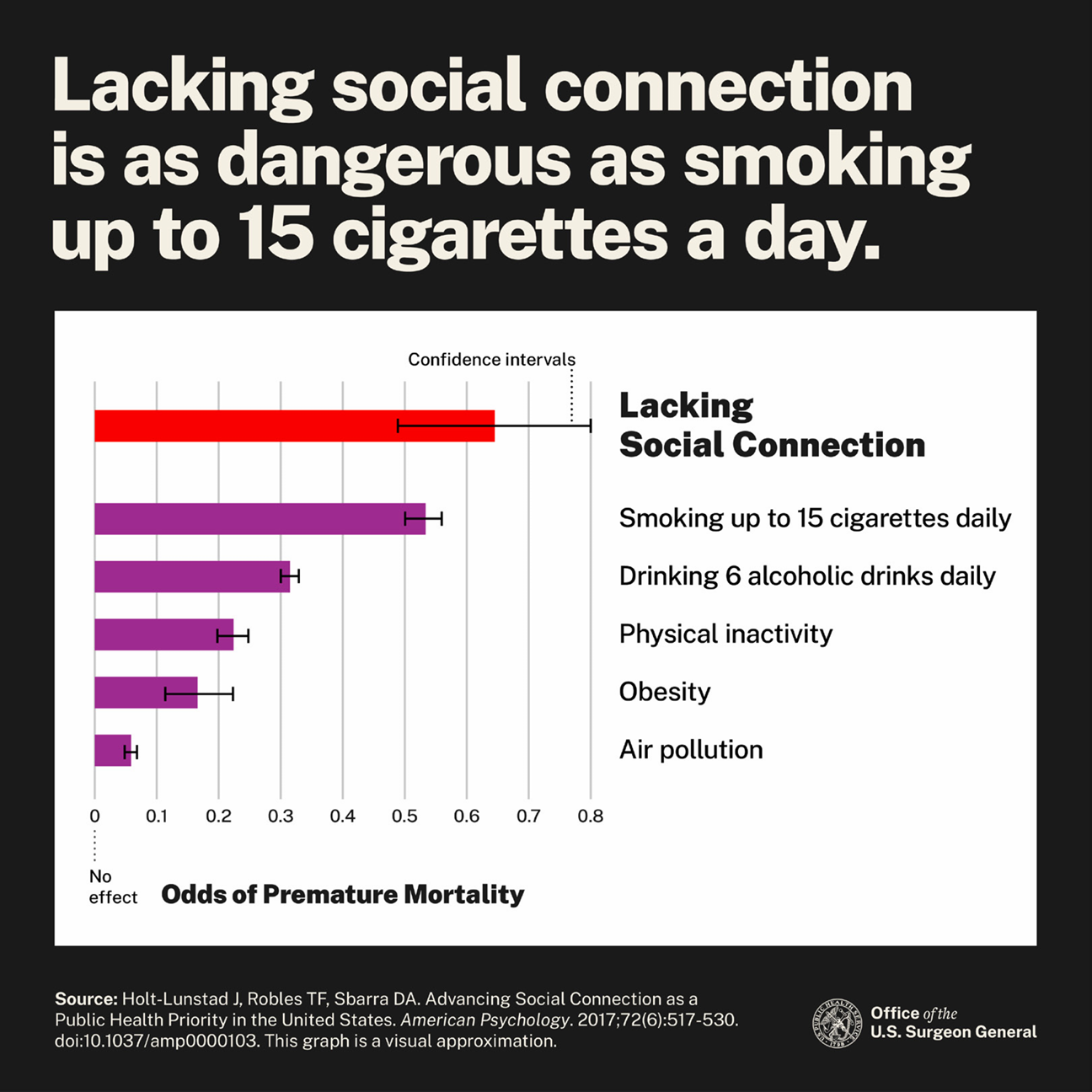
Lack of social connection compared with other health risks. Recent estimates, based on synthesizing data across 148 studies, with an average of 7.5 years of follow-up, suggest that social connection increases the odds of survival by 50 percent. Indeed, the effects of social connection, isolation, and loneliness on mortality are comparable, and in some cases greater, than those of many other risk factors including lifestyle factors (e.g., smoking, alcohol consumption, physical inactivity), traditional clinical risks factors (e.g., high blood pressure, body mass index, cholesterol levels), environmental factors (e.g., air pollution), and clinical interventions (e.g., flu vaccine, high blood pressure medication, rehabilitation). Graphic: Office of the U.S. Surgeon General
According to the report, insufficient social connection has also been linked to an increased risk of heart disease, stroke, anxiety, depression and dementia.
Additionally, loneliness was reported among the primary motivations for self-harm, according to a systematic review cited in the advisory.
“Given the profound consequences of loneliness and isolation, we have an opportunity, an obligation, to make the same investments in addressing social connection that we have made in addressing tobacco use, obesity, and the addiction crisis,” U.S. Surgeon General Dr. Vivek Murthy said.
Social connection can reduce the health risks associated with isolation and loneliness. One study found that frequently confiding in others is associated with up to 15% reduced odds of developing depression among people who are at higher risk due to a history of traumatic or adverse life experiences. [more]
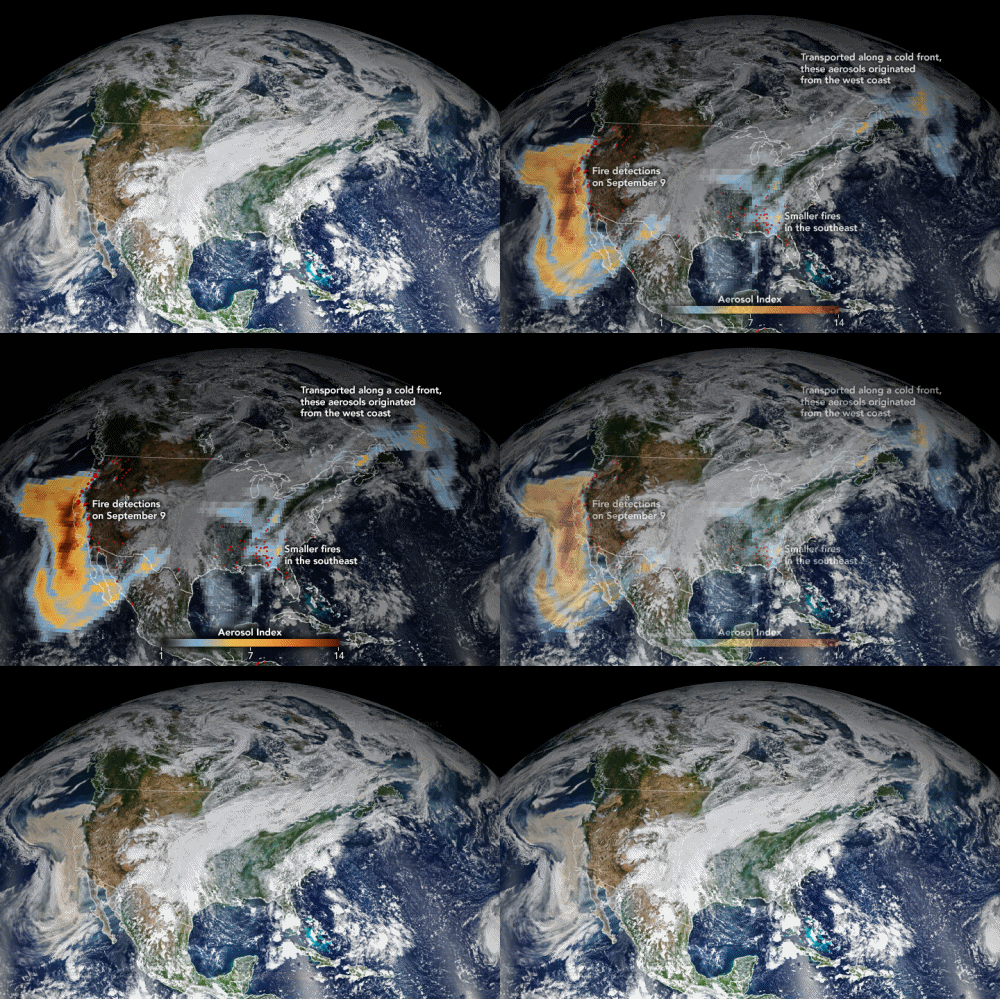
A three-dimensional radar rendering of the Creek Fire at peak depth. Graphic: Neil Lareau / University of Nevada Reno By Matthew Cappucci 12 September 2020 (The Washington Post) – More than 3.1 million acres have burned in California this year,...
Alaska’s Columbia glacier has retreated rapidly over the last four decades. This false-color image was taken in July 2014. Photo: Lauren Dauphin / NASA Earth Observatory By Carolyn Gramling 10 December 2019 SAN FRANCISCO (Science News) – A mesmerizing new...
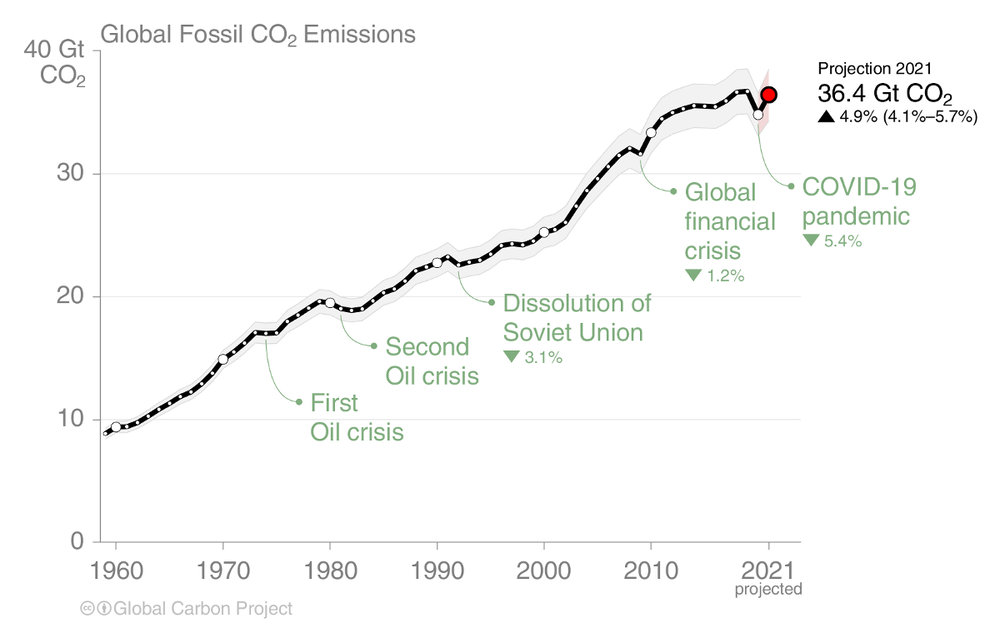
Global carbon dioxide emissions from fossil fuels, 1959-2021. Global CO2 emissions bounced back after COVID-19 restrictions and reached pre-pandemic levels in 2021. Graph: Global Carbon Project By Pep Canadell, Corinne Le Quéré, Glen Peters, Pierre Friedlingstein, Robbie Andrew, and Rob...