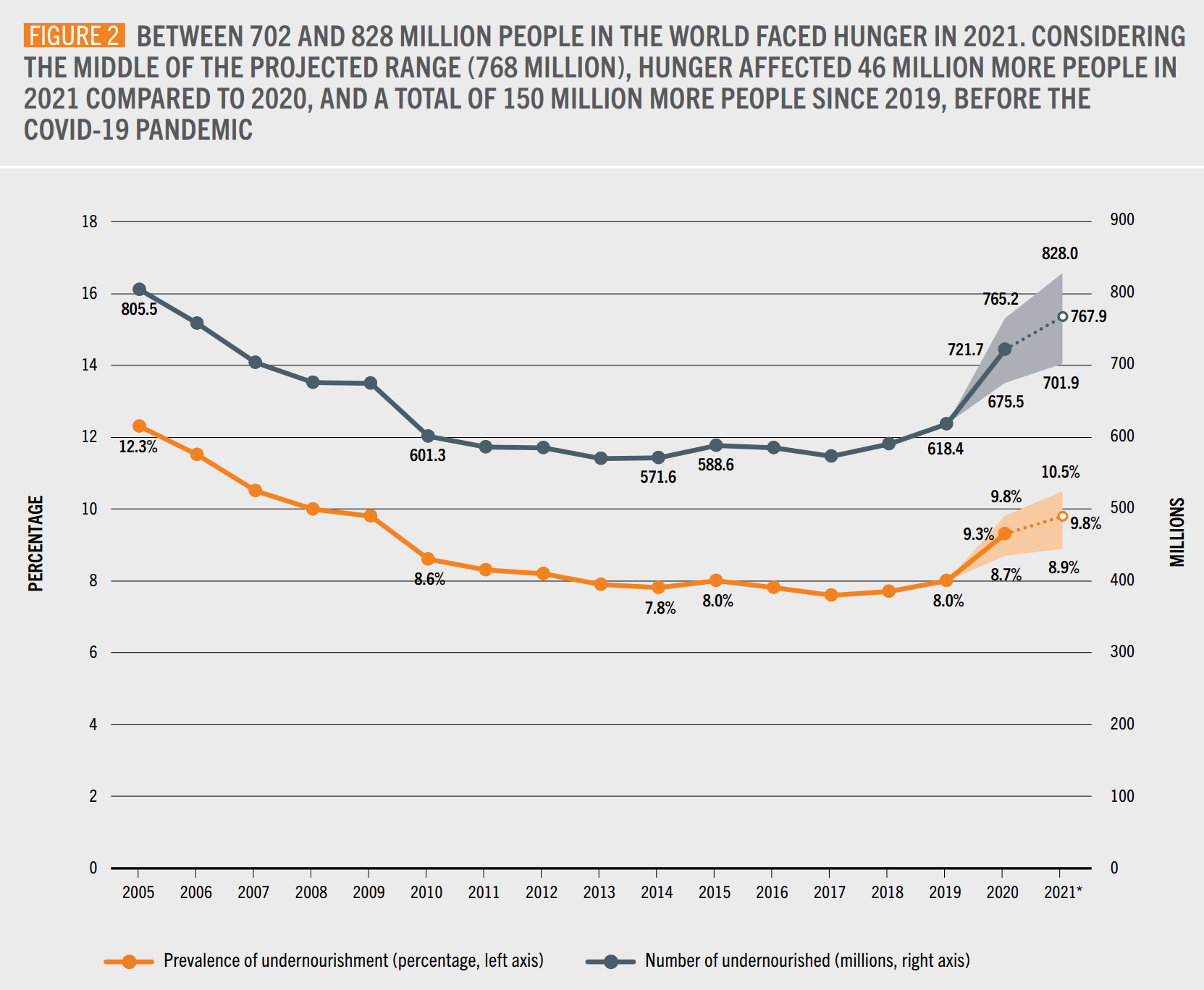
Prevalence of undernourishment (left axis) and number of undernourished people (right axis), 2005-2021. World hunger rose further in 2021, following a sharp upturn in 2020 in the midst of the COVID-19 pandemic. The persistence of the pandemic and its enduring consequences, which exacerbated existing inequalities, have contributed to further setbacks in 2021 toward achievement of the Zero Hunger target by 2030. Between 702 and 828 million people in the world faced hunger in 2021. Considering the middle of the projected range (768 million), hunger affected 46 million more people in 2021 compared to 2020, and a total of 150 million more people since 2019, before the COVID-19 pandemic. Graphic: FAO

UN report: World hunger rose again in 2021, with 2.3 billion people severely or moderately hungry – “This year’s report should dispel any lingering doubts that the world is moving backward in its efforts to end hunger”

By Edith M. Lederer 6 July 2022 UNITED NATIONS (AP) – World hunger rose in 2021, with around 2.3 billion people facing moderate or severe difficulty obtaining enough to eat — and that was before the Ukraine war, which has sparked increases in the cost of grain, fertilizer and energy, according to a U.N. report […]

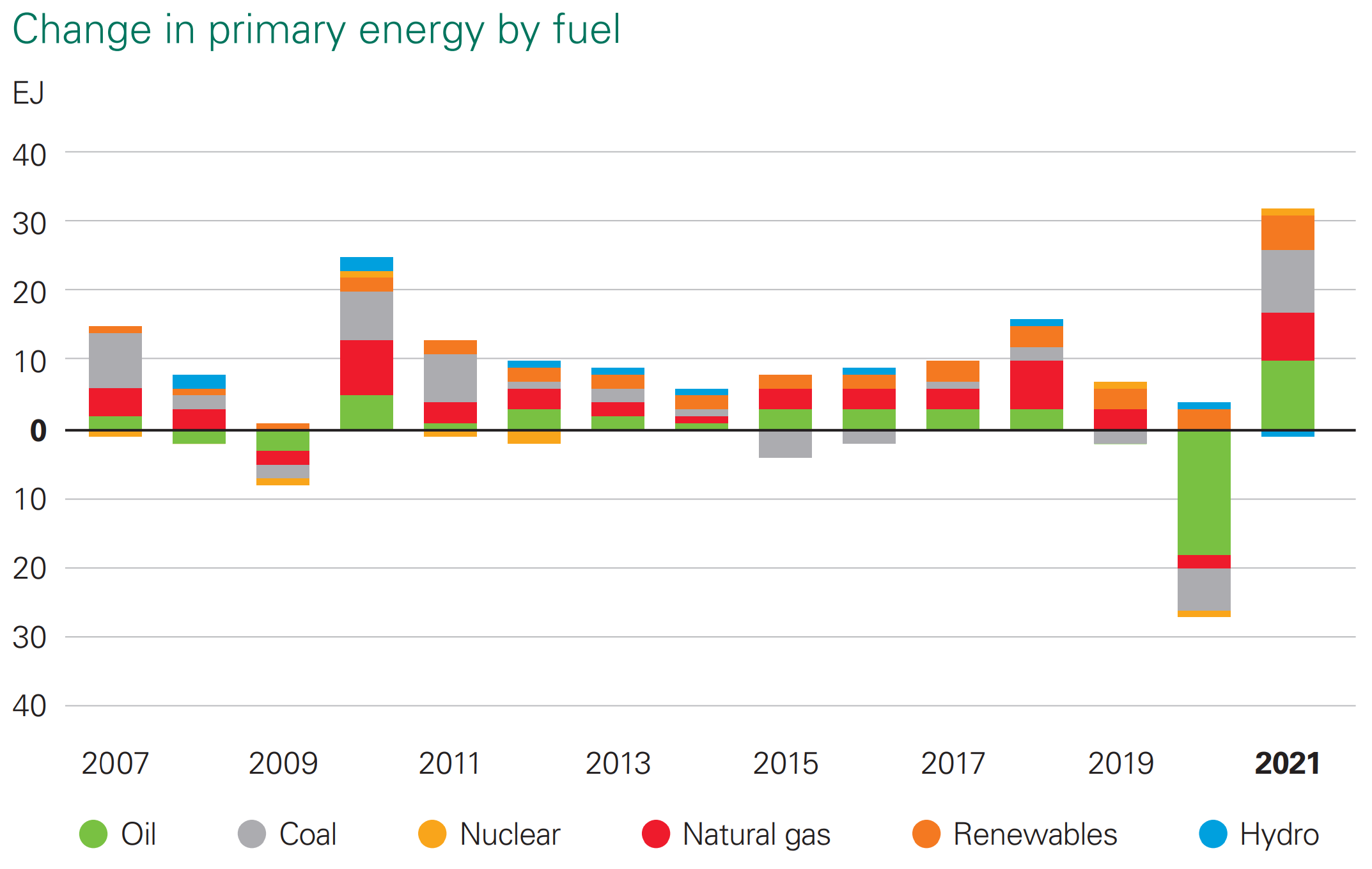
Change in primary energy by fuel, 2007-2021. Primary energy in 2021 grew by its largest amount in history, with emerging economies accounting for most of the increase. Primary energy grew by 31 exajoules (EJ) in 2021, the largest increase in history and more than reversing the sharp decline seen in 2020. Primary energy in 2021 was 8 EJ above 2019 levels. The increase in primary energy in 2021 was driven by emerging economies, which increased by 13 EJ, with China expanding by 10 EJ. Taking 2020 and 2021 together, primary energy consumption in emerging economies increased by 15 EJ, largely reflecting growth in China (13 EJ). In contrast, energy demand in developed economies in 2021 was 7 EJ below 2019 levels. The increase in primary energy between 2019 and 2021 was entirely driven by renewable energy sources. The level of fossil fuel energy consumption was unchanged between 2019 and 2021, with lower oil demand (-8 EJ) offset by higher natural gas (5 EJ) and coal (3 EJ) consumption. Graphic: BP

BP Statistical Review of World Energy 2022: Carbon emissions rebound after pandemic dip – Coal prices surge – “The world remains on an unsustainable path”

By Spencer Dale 28 June 2022 (BP) – The challenges and uncertainties facing the global energy system are at their greatest for almost 50 years, at the time of the last great energy shocks of the 1970s. Most immediate is the impact of the terrible events taking place in Ukraine, with its tragic toll on […]

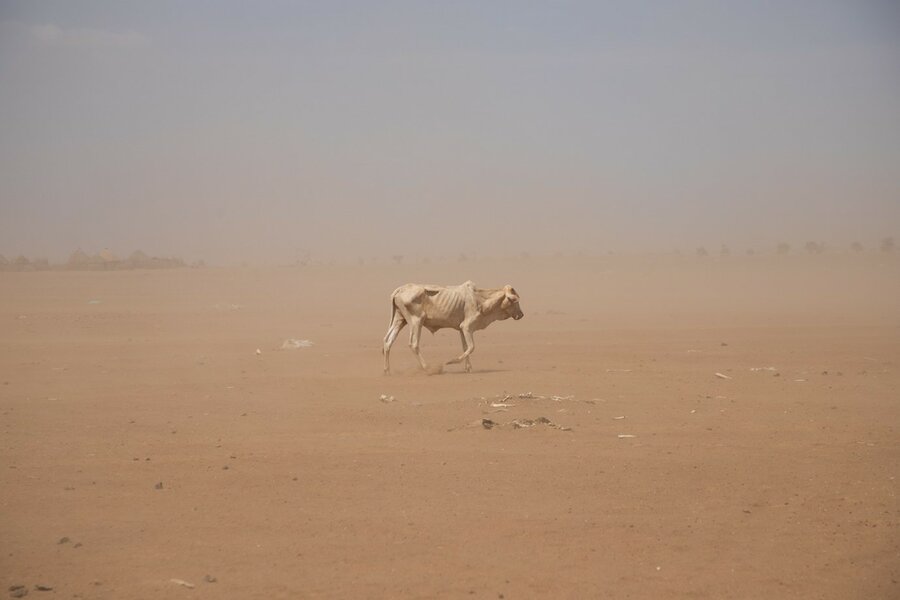
The bones of other animals surround an emaciated cow in Ethiopia’s Somali Region. Carcasses are a daily reminder of the devastation caused by the 2021-22 drought. Photo: Michael Tewelde / WFP

Horn of Africa braces for “explosion of child deaths” as hunger crisis deepens – Three million livestock have died since mid-2021 from drought and disease

7 June 2022 (UNICEF) – An “explosion of child deaths” is likely and imminent in the Horn of Africa unless the international community takes immediate action to prevent a new hunger disaster, UN humanitarians warned on Tuesday. To illustrate continuing deep concern about emergency levels of malnutrition in Somalia and the wider Horn of Africa, […]

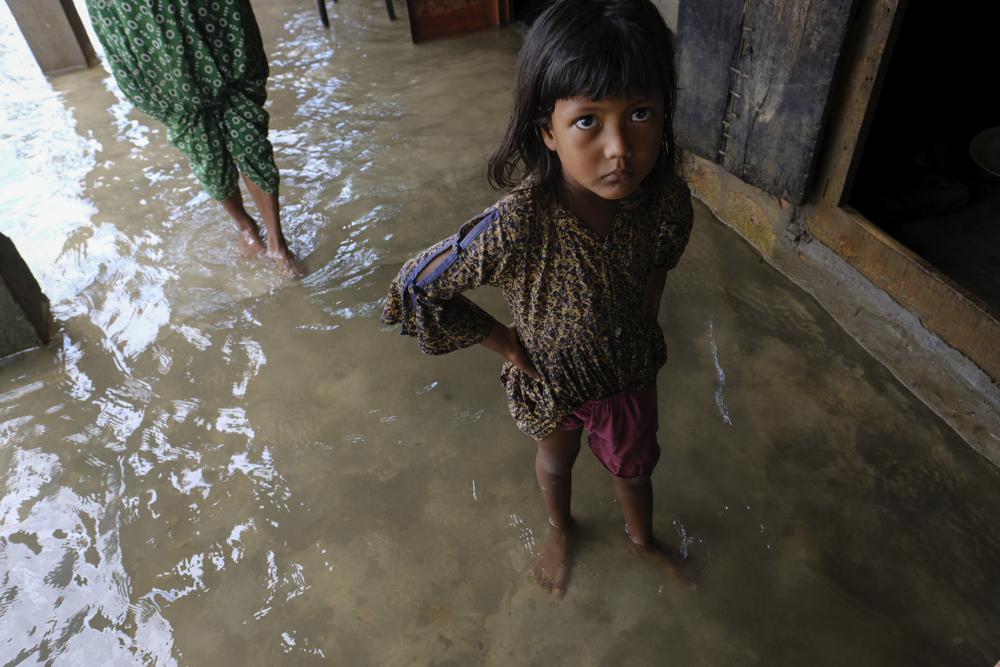
A girl reacts to the camera as her family members inspect their damaged belongings at her home, while flood water levels recede slowly in Sylhet, Bangladesh, Wednesday, 22 June 2022. Photo: Mahmud Hossain Opu / AP Photo

Climate change a factor in “unprecedented” South Asia floods – “This is something that we have never heard of and never seen”

By Aniruddha Ghosal and Al-Emrun Garjon 22 June 2022 SYLHET, Bangladesh (AP) – Scientists say climate change is a factor behind the erratic and early rains that triggered unprecedented floods in Bangladesh and northeastern India, killing dozens and making lives miserable for millions of others. Although the region is no stranger to flooding, it typically takes place later […]

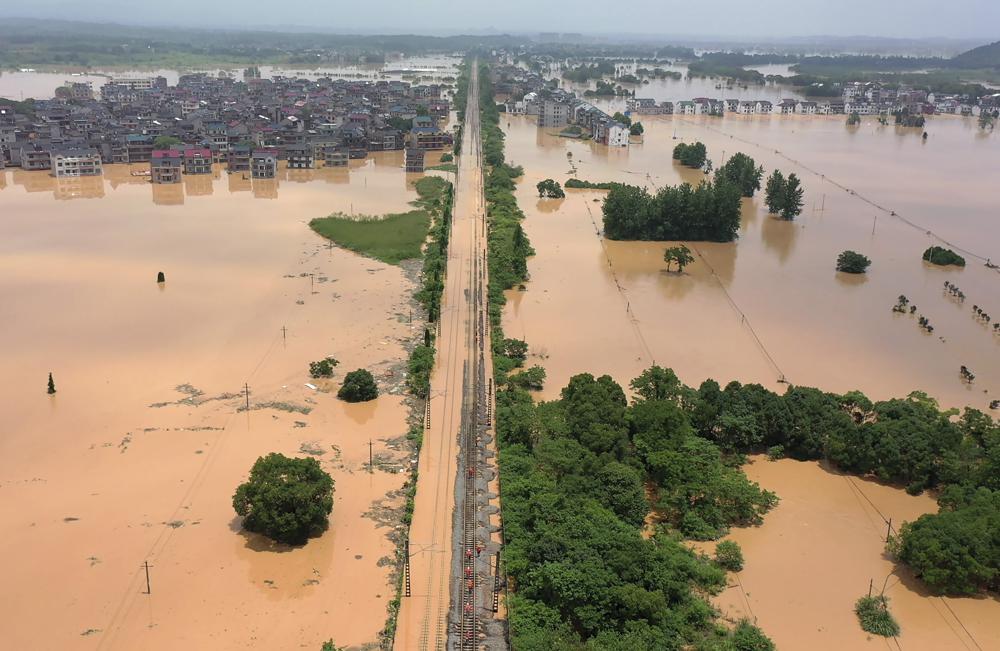
Aerial view of workers gathering along a section of flooded railway in Shangrao in central China's Jiangxi province, Tuesday, 21 June 2022. Photo: Chinatopix / AP

Mass evacuations as record rain, floods strike southern China – Pearl River water level hits 100-year high – Heatwave causes record power demand surge in northern cities

By Jack Lau 20 June 2022 (SCMP) – Floodwaters engulfed homes, fields and roads in southern China as authorities evacuated nearly 150,000 residents after weeks of record rain. A task force from Beijing was sent to Guangxi Zhuang autonomous region and Guangdong province to lead rescue and evacuation efforts on Monday, state broadcaster CCTV reported. The China Meteorological Administration said […]

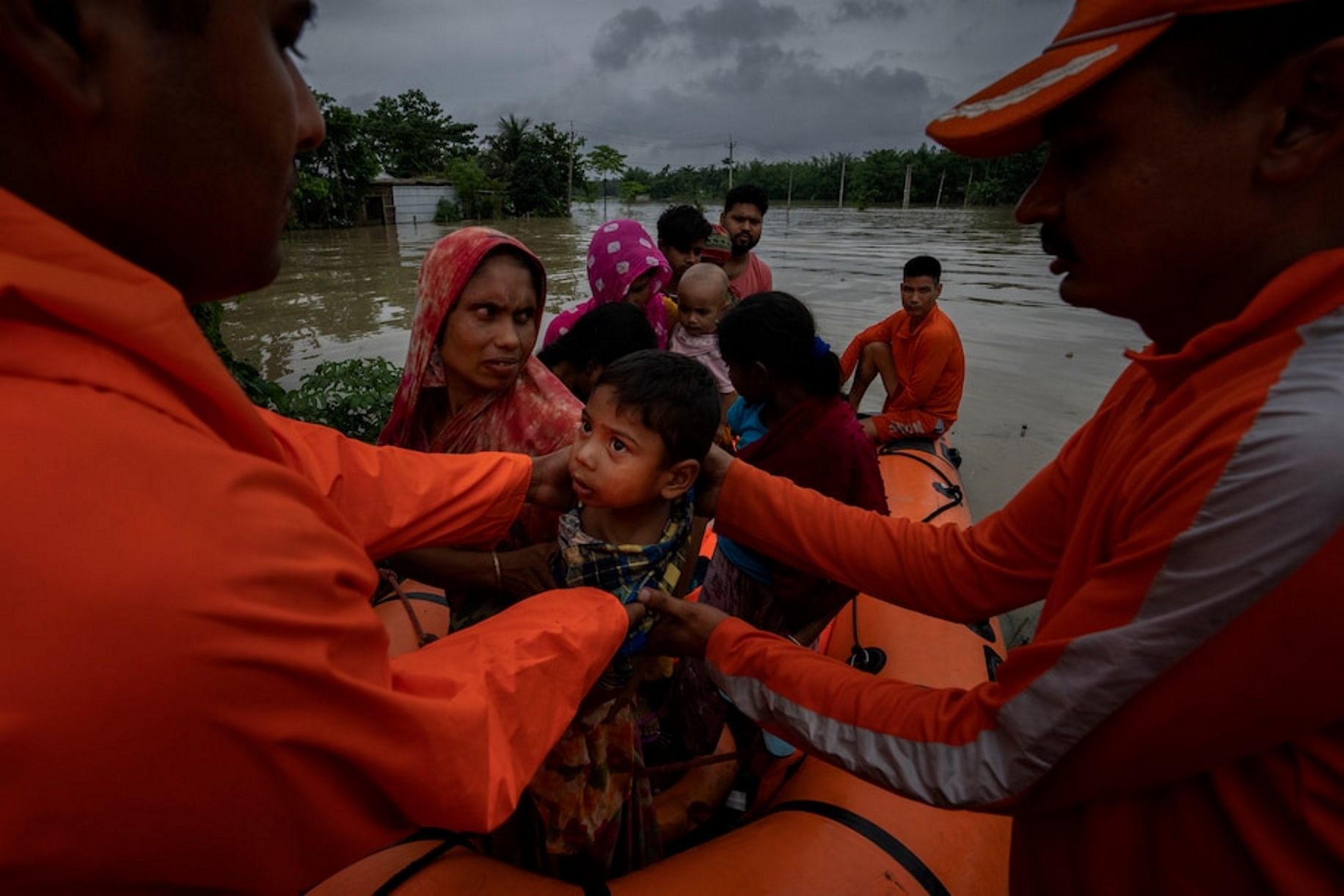
National Disaster Response Force (NDRF) personnel rescue flood-affected people in Korora village, west of Gauhati, India, Friday, 17 June 2022. Photo: Anupam Nath / AP

More than 9.5 million people stranded after deadly floods hit India and Bangladesh – “The flooding is the worst in 122 years in the Sylhet region”

By Swati Gupta and Rhea Mogul 22 June 2022 NEW DELHI (CNN) – Millions of people across India and Bangladesh have been affected by raging floods and landslides that left more than 100 people dead and entire communities devastated. The South Asian nations, home to more than 1.3 billion people, have been particularly badly hit by the […]

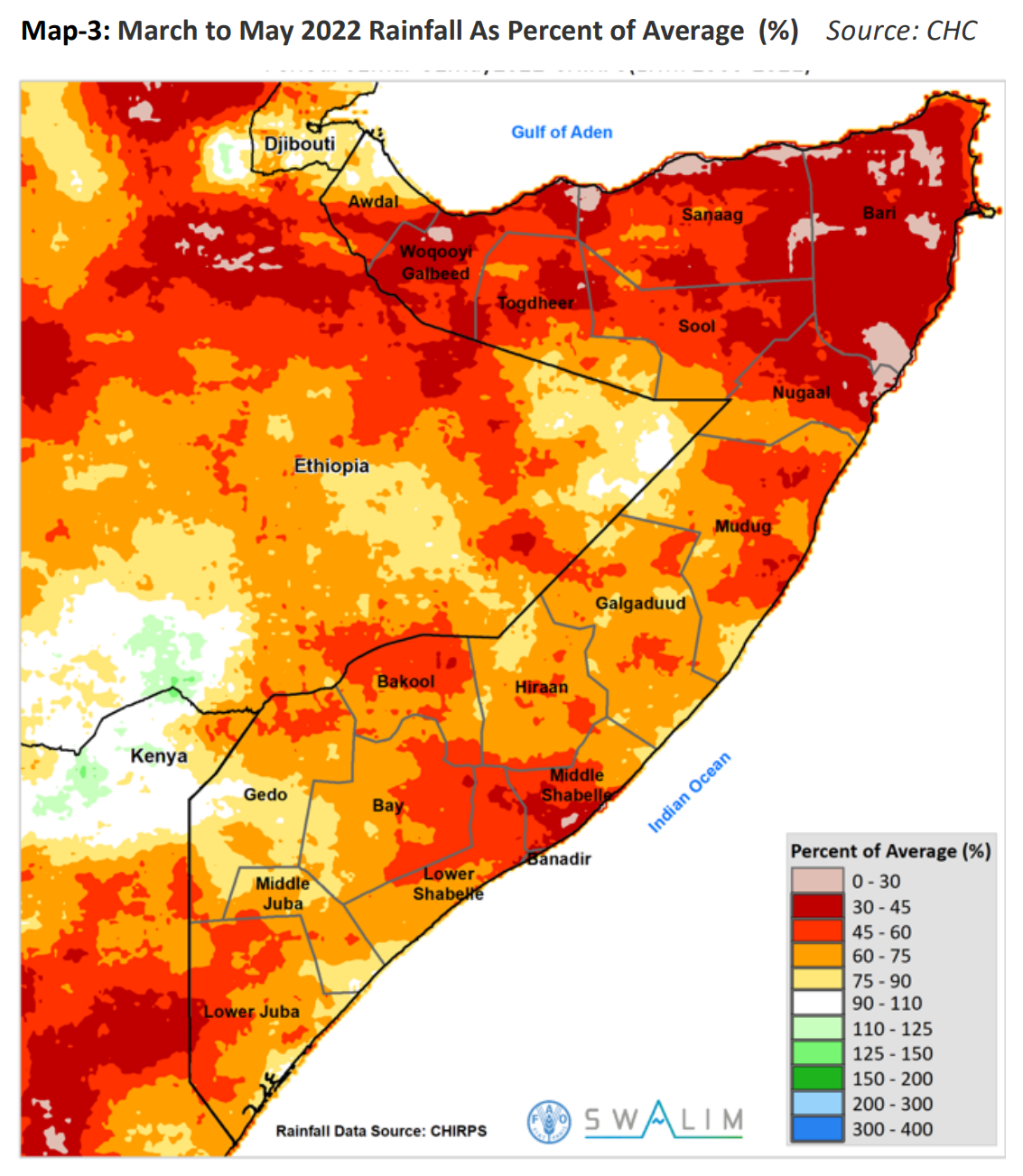
Map showing the March-to-May (Gu) 2022 rainfall as percent of average in the Horn of Africa. The March/April to June 2022 Gu season rainfall was below average across the country, worsening the existing drought conditions in Somalia. The seasonal rains, which started in mid to late April appear to be ending early by late May/early June 2022. The rains were characterized by heavy storms lasting a few hours and were concentrated within a short period. Heavy downpours led to high runoff and limited replenishment of pasture and water resources. The poor spatial and temporal distribution could not sustain crop growth nor replenish the water sources adequately. This map compares the 2022 Gu seasonal rainfall with the long-term average for the same season. Northern parts of Somalia recorded 30 percent to 60 percent of the average rainfall while central and southern regions received 45 percent to 75 percent of average. This is also consistent with observed rainfall data from rain-gauge stations. Data: CHC / CHIRPS. Graphic: FAO

Somalia faces grim humanitarian catastrophe – “When we lost our livestock, we lost our minds”

By Mariel Müller 17 June 2022 SOMALIA (DW) – In January 2022, Hirsiyow Mohamed and her three children left her drought-stricken village of Drumo in Somalia. But after 15 days of walking through the hot desert with almost no water and food, she arrived with only one child at the newly built camp for displaced people near […]

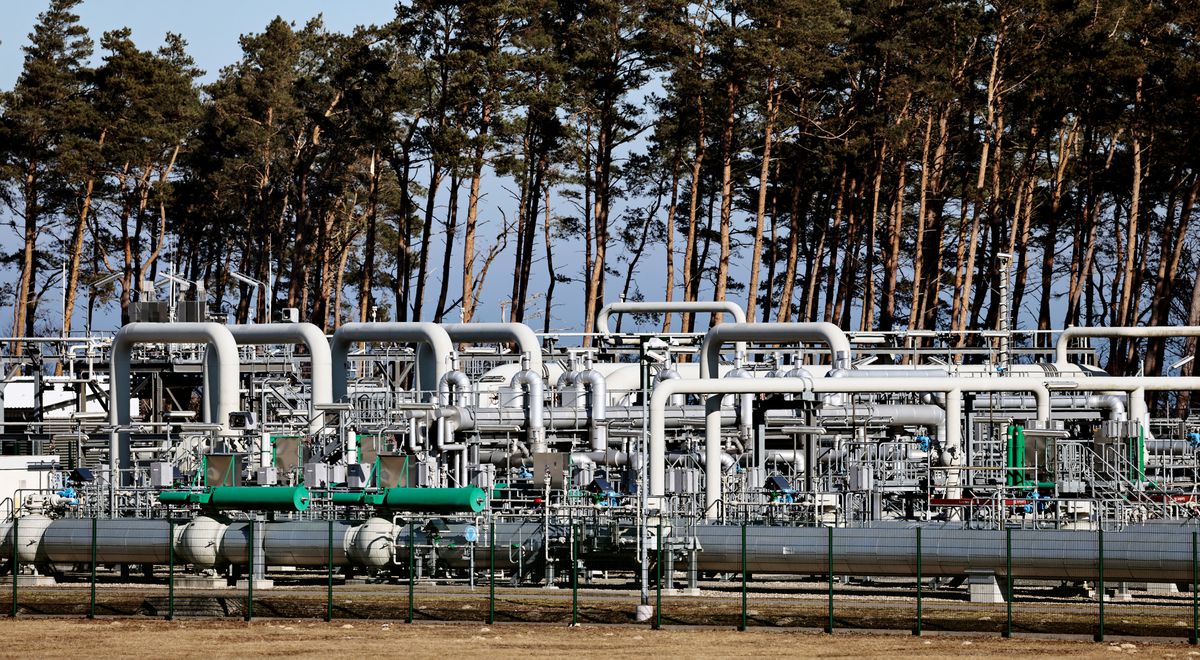
Pipes at the landfall facilities of the Nord Stream 1 gas pipeline are pictured in Lubmin, Germany, 8 March 2022. Photo: Hannibal Hanschke / REUTERS

Europe may shift back to coal as Russia turns down gas flows – “If we don’t do it, then we run the risk that the storage facilities will not be full enough at the end of the year toward the winter season. And then we are blackmailable on a political level.”

By Vera Eckert and Francesca Landini 20 June 2022 FRANKFURT/MILAN (Reuters) – Europe’s biggest Russian gas buyers raced to find alternative fuel supplies on Monday and could burn more coal to cope with reduced gas flows from Russia that threaten an energy crisis in winter if stores are not refilled. Germany, Italy, Austria and the […]

Esther Elaar, a pregnant mother living in Loima, Turkana County, Northern Kenya, fetches and carries 20 litres of water for her family to use every day. Photo: BBC Media Action

Is the world running out of freshwater? “A lot of women have miscarried in this area while going to look for water”

By Simge Eva Dogan 1 June 2022 (Wellcome) – More than half of the world’s population faces water scarcity for at least one month a year. Safe water is a basic human right and essential for our health, whether we use it for drinking, food production or hygiene. But it’s also a finite resource. Only […]

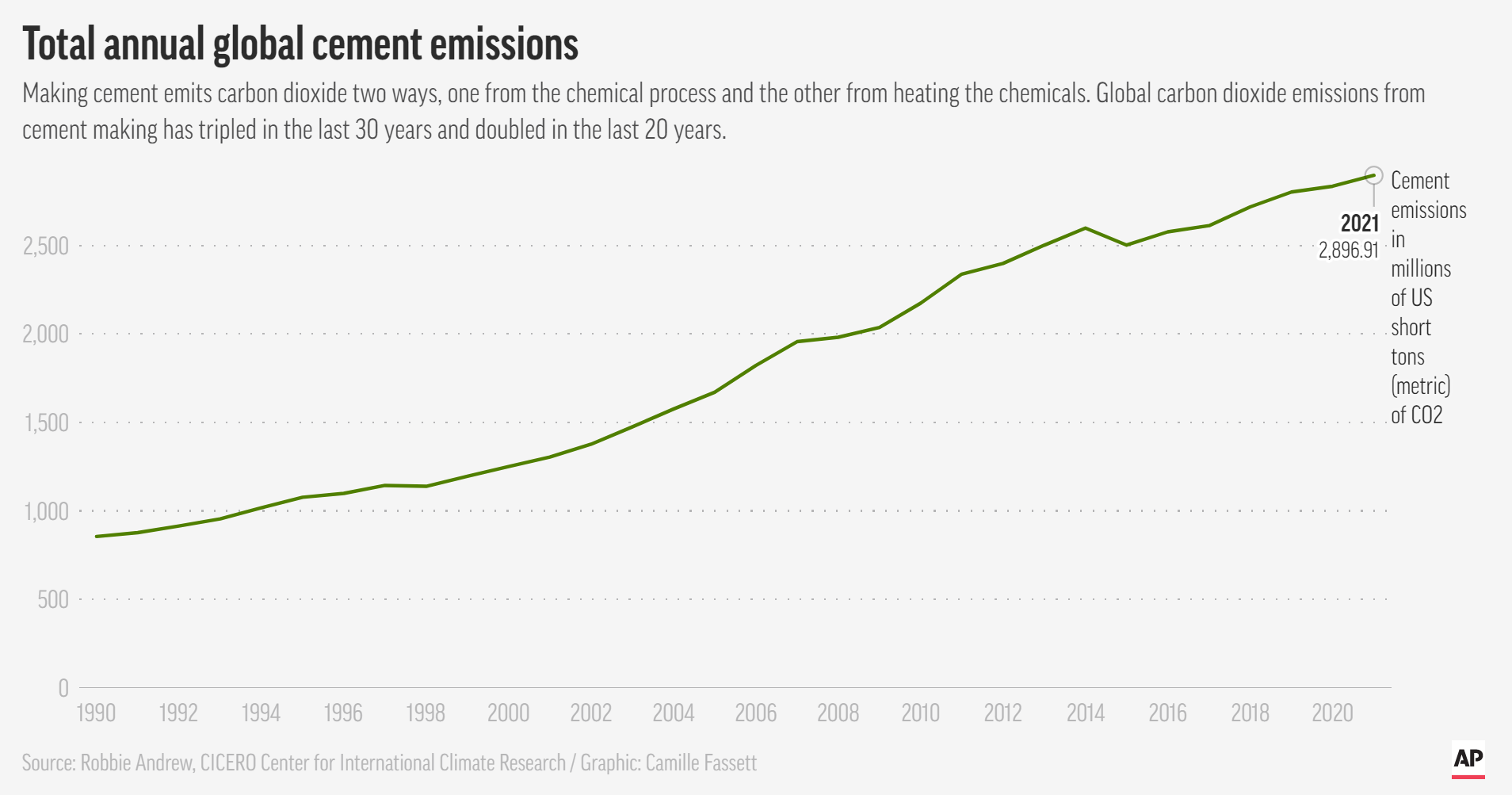
Total annual global cement emissions, 1990-2021. Making cement emits carbon dioxide two ways, one from the chemical process and the other from heating the chemicals. Global carbon dioxide emissions from cement making have tripled in the last 30 years and doubled in the last 20 years. Data: Robbie Andrew / CICERO Center for International Climate Research. Graphic: Camille Fassett / AP

Carbon dioxide emissions from cement production double in 20 years – “Each person on the planet is consuming on average more than a kilogram of cement per day”

By Seth Borenstein 22 June 2022 (AP) – Heat trapping carbon dioxide emissions from making cement, a less talked about but major source of carbon pollution, have doubled in the last 20 years, new global data shows. In 2021, worldwide emissions from making cement for buildings, roads and other infrastructure hit nearly 2.9 billion tons […]
Social media & sharing icons powered by UltimatelySocial